From the Bali Elections to the Dutch Agricultural Crisis: A Comparison of Hope and History
 Antonius Bakker
The Spirit of Bali: Democracy and Solidarity in the Indonesian ElectionsWitnessing the Indonesian Elections on Bali revealed a striking sense of national solidarity. However, a conversation with a local farmer seeking Agricultural Loans for expansion mirrored the historical path of the European Farming Policy. While Agricultural Subsidies once fueled growth, they ultimately led to a modern Nitrogen Crisis & Environment issues, serving as a cautionary tale.
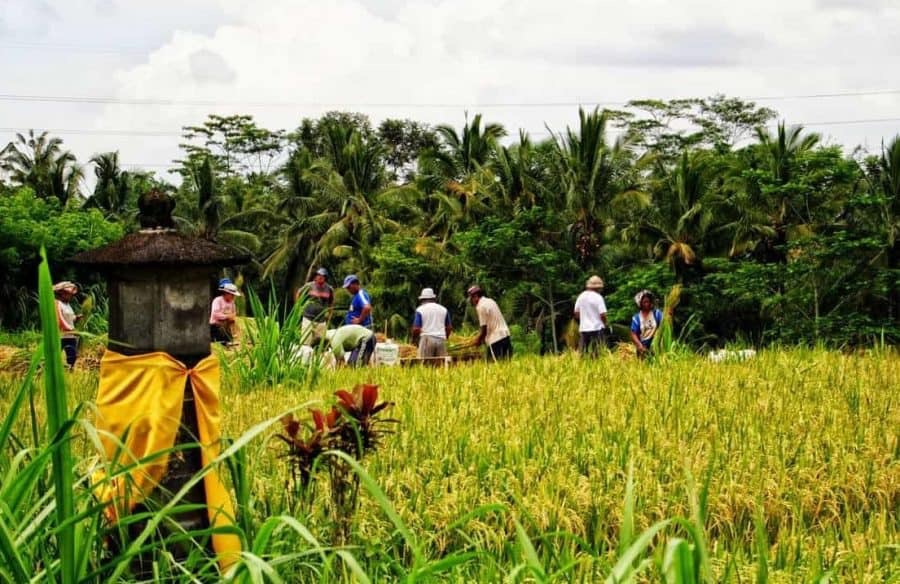
Exactly one year ago, I found myself on the idyllic island of Bali, Indonesia. It was a remarkable time to be there, as the nation stood on the brink of a crucial democratic process. As a down-to-earth Dutchman, I watched the dynamics surrounding the Indonesian Elections with a mixture of surprise and admiration. A minister who had faced sharp criticism within the sitting cabinet was nevertheless elected as the new president of this vast archipelago with a convincing majority.
What touched me most was not the political outcome itself, but the atmosphere among the people. Despite the fierce resistance from a large group of voters against this specific candidate, there was a deep and sincere sense of solidarity among the population. People of different religions, diverse social backgrounds, and varying levels of education came together at the ballot box. The turnout was unprecedentedly high, testifying to an enormous engagement with the national future. It was a powerful demonstration that democracy is vibrant in Southeast Asia and that collective identity can sometimes transcend political division.
The Farmer’s Dream: Ambition and Growth
Picture: Authentic Indonesia
A few days before the actual election day, I struck up a conversation with a local farmer at the place where we were staying. This man shared his hopes and his political preference with me. He specifically chose one candidate because their platform promised to give Indonesian farmers more opportunities for expansion. The dream of this farmer was clear and universal: he wanted to attract capital to grow his business.
His eyes sparkled as he spoke about the necessity of Agricultural Loans to realize his plans. He wanted to purchase more land and expand his livestock with more pigs and sheep. He had even already visited the bank, where he was told that financing would not be an issue; it was simply a matter of waiting for the necessary rights and permits. For him, the future was bright, and the path to scaling up seemed like the only logical route to prosperity.
A Mirror of History: European Farming Policy
At that moment, I could not suppress a wry smile. The farmer immediately asked me why I was laughing, and that became the starting point for an in-depth conversation about the mirror that Western history holds up to us. I told him about the developments within the agricultural sector in Europe and the formation of the European Farming Policy.
I explained how, after the Second World War, Dutch politics decided that the country should never suffer from hunger again. The memory of the enormous food shortages and the "Hunger Winter" of 1944-1945 was deeply rooted in the collective memory. Led by visionary ministers, it was determined that sufficient food had to be produced at all costs in case another global crisis broke out. The focus was entirely on maximum self-sufficiency and a strong improvement of domestic production.
The Paradox of the Agricultural Subsidies
The Balinese farmer listened intently as I spoke about the enormous role of the government in this process. In the first decades after the war, agriculture was expanded with a great deal of state support. Because farmers played a vital role in national security by guaranteeing the food supply, they were protected by a system of Agricultural Subsidies.
Initially, this provided stability, but it also created a unique economic reality. Farmers made relatively little profit, meaning they also had to pay very little tax, but they became entirely dependent on financial injections from The Hague and later Brussels. To maintain their income while margins shrank, the government told them they had to keep growing. Scaling up was no longer a choice, but a survival strategy to meet the standards of the modern economy.
The Global Legacy: Environment and Manure (Keyword: Nitrogen Crisis & Environment)
I ended my story to the farmer with the harsh, contemporary reality of the Dutch countryside. Years of focus on unrestrained growth and intensification have led to an ecological saturation point. Due to the massive increase in the number of animals, the manure surplus has risen to a level that is unsustainable for nature.
What began in the 1950s as a hopeful project for food security has now devolved into a complex Nitrogen Crisis & Environment issue that deeply divides Dutch politics and society. I explained to him that the manure surplus now directly threatens our environment and that politicians now view this as a global problem. While the Balinese farmer dreamed of his first loan and his first extra hectare of land, I saw in his ambitions the blueprint of the mistakes we made decades ago.
Conclusion: The Price of Progress
The conversation in Bali reminded me that the human drive for growth and security is universal. Whether it is a farmer in Bali dreaming of a larger herd after the elections, or a Dutch policymaker in 1945 wanting to banish hunger; the intentions are often good. However, the lesson we must draw from European history is that economic growth without ecological boundaries is ultimately a boomerang that hits back hard.
The solidarity I witnessed during the elections in Indonesia is admirable, but the challenge for the new president will be to channel the ambitions of the population in a way that does not lead to the environmental crises we are currently grappling with in the West. As I said goodbye to the farmer, I fervently hoped that his dream would become a reality in a more sustainable way than ours did.