In the Memory of My Teeth

Teeth have memory. That’s what my dentist told me. No matter how long braces have pressed against them, months or years, they always want to return home. Without constant restraint, they will relapse.
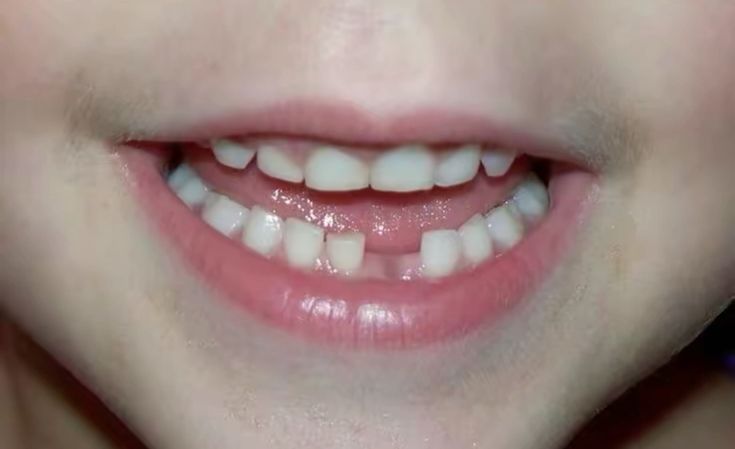
I wore braces for over four years. When I stopped, my teeth drifted back, the crookedness reappeared, and the gap widened. Strangely, I felt both relief and dread. Relief because my mouth was no longer heavy, but dread because the scrutiny of others felt heavier.
The pain and discomfort were relentless, and tightening appointments filled me with dread. The overhead light burned into my eyes. The machines shrieked. The clinic smelled permanently of antiseptic. There were endless appointments. And there was the envy that settled somewhere behind my ribs whenever I saw someone with effortlessly straight teeth. But none of that mattered. I got to pick the colour of the brackets. Choosing between green and pink felt strangely empowering until I realised it was the only choice I had been offered. I counted the days until I would finally get my braces off. Little did I know that this would just be the beginning. I had no idea that I would need to wear my retainers for years afterwards. Every night before bed, I slipped the retainers into my mouth. Slowly, blood would begin to pool around them. I could taste the iron, and the bitterness lingered long after. Funny how some memories leave the mind, while others stay on the tongue. That was alright, right? Just the bare minimum price for perfectly aligned teeth.
But who wanted the picture-perfect teeth? Me? Or the people constantly pointing out the supposed imperfection?
I remember that back in middle school, whenever I laughed, I covered my mouth with my hands to make sure no one found another reason to talk about my not-so-natural-looking, but ironically, perfectly natural teeth.
It was around middle school that I began making changes to myself. First, someone told me I spoke too loudly, so I toned down my voice. Then someone pointed out another imperfection, and I grew more insecure. Around the same time, a classmate pointed out that my front teeth were crooked, and thus began my seemingly endless journey of dentist appointments.
Soon I became an expert at editing myself. I laughed more quietly. I smiled more carefully. Before speaking, I wondered whether my voice was too loud. Before smiling, I wondered whether my teeth looked strange. Every comment seemed to become another instruction manual for the kind of girl I was supposed to become.
Since then, five more women in my immediate family have gotten braces.
The number of men: zero.
At first, I dismissed it as coincidence. Then I started paying attention. The waiting room at my orthodontist's office was almost always filled with girls and women. I began to wonder whether I had simply noticed a pattern or whether I was looking at one.
Was peculiar to my family or part of something much larger. Why had every woman around me been told to straighten her teeth, while not a single man had? I started looking into it. Research consistently shows that women undergo orthodontic treatment more often than men, despite having broadly similar clinical needs. A 2024 study found no significant difference in the severity of malocclusion between males and females. If our orthodontic needs are broadly the same, what explains the disparity? Perhaps the pressure to "fix" our smiles has never been only about health. Perhaps it has always been about conformity, about bringing women's bodies a little closer to an aesthetic ideal.
Honestly, I didn’t need research to tell me this. The ratio of men and women sitting in my dentist’s waiting room had already told me enough.
The braces may have straightened my teeth and made them more aesthetically pleasing, but they also made me hyper-aware of my mouth. My smile no longer feels like my own. It feels constructed, crafted through pressure, pain, and expectation rather than by me. Sometimes, it feels as though I am carrying someone else's mouth.
I often wonder when exactly it stopped feeling like mine. Was it the first time someone pointed out the gap between my front teeth? The first appointment? Or was it so gradual that I never noticed it happening? There is something unsettling about becoming a stranger to a part of your own body. A smile is supposed to be instinctive. It appears before thought, before language. Yet mine has become something I monitor, adjust, and rehearse in the mirror. I have spent so many years trying to perfect it that I no longer know what my unguarded smile looks like. Perhaps that is the real cost of chasing an ideal. It is not the pain, or the years spent in a dentist's chair, or even the blood. It is the slow erosion of the ease with which you once inhabited your own face.
I look in the mirror ten times a day and sigh every time I see the gap. I still can’t tell whether it is a sigh of frustration or relief.
I recently watched No Other Choice. Throughout the film, the protagonist lives with relentless tooth pain. I found myself thinking about what the pain represented. To me, it felt less like a physical ailment than a warning, a body insisting that something was deeply wrong, that every compromise was taking him further away from himself. By the end, when he pulls out his teeth, I didn't see it simply as an act of desperation. I saw someone who had already lost the version of himself he had been trying to preserve.
It made me wonder whether my own teeth had been trying to tell me something all along. I used to think my teeth were trying to return to the position they had occupied before braces. Now I wonder whether they were trying to return to something much larger. To the version of myself that existed before every careless comment convinced me that I needed correcting. Before I learned to look at myself through someone else's eyes.
Even after we die, centuries may pass, yet our teeth remain. They are a biological archive. They preserve traces of the water we drank as children. Teeth remain even when the rest of our bodies have rotted away. Long after beauty has ceased to matter, they remain, carrying traces of the life that shaped them. They are both records and resistance.
Resistance might be my favorite English word ever.
The refusal to bend. To reshape yourself. To comply with ideals that were never yours. To lose your identity.
We celebrate resistance in history books. We admire people who refuse to surrender to unjust systems. Yet when resistance takes place in ordinary bodies, it is treated differently. A woman who refuses to reshape herself is rarely called resilient. More often she is called careless, stubborn, difficult, unkempt. Somewhere along the way, conformity became indistinguishable from virtue.
I know everything I have argued.
And yet tonight I will once again slide my retainers into my mouth, not out of habit or desire, but out of fear.
Fear of becoming, once again, a mouth before I become a person.
If everything becomes identical, then we lose our identity.
Maybe one day we will look at our crooked smiles in the mirror, and the only thing they will do is make our smiles even wider.