
Ice Ages and Global Hothouses: Are Human Emissions Truly Responsible?

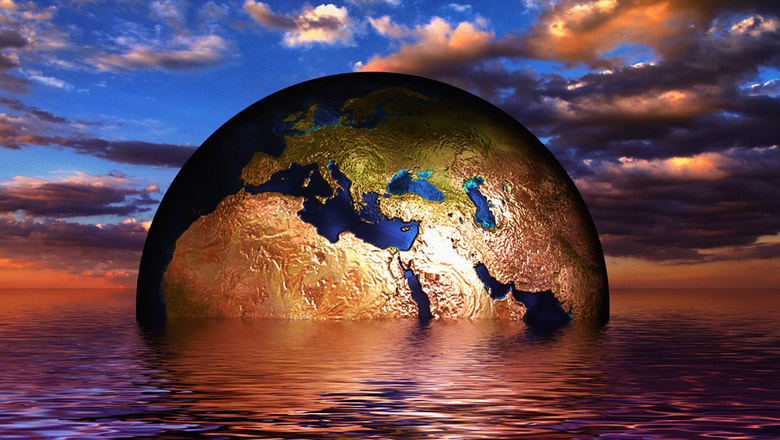
I would like to share a story from a recent four-week road trip across Europe with my wife Monique and our dog Pip. We thoroughly enjoyed traveling through Germany, Switzerland, Italy, France, and Belgium, exploring scenic routes with our small Kip Caravan. That compact trailer effectively serves as our mobile bedroom during warm European summers. Normally, we convert the sleeping quarters into a sitting area each morning, but the intense summer heat made that unnecessary. For four solid weeks, we spent our days relaxing outside in the sun.
Dosing off in the intense heat, I occasionally woke up with a jolt, reminded of relentless media reports on global warming, the impending climate crisis, and apocalyptic predictions surrounding environmental change. Scientists and political leaders frequently assert that human carbon emissions, industrial pollution, and consumer lifestyle habits are the sole drivers of global temperature increases. Sitting under that scorching sun, I drifted back into a deep sleep, and my mind traveled millions of years into Earth’s deep geological history.
Paleoclimatology and Earth’s Ancient Glacial Epochs
My dream transported me to a prehistoric Earth long before human existence, industrial manufacturing, or fossil fuel consumption. During the Huronian glaciation between 2.4 and 2.1 billion years ago, our planet was a completely frozen icebox. Ancient photosynthetic cyanobacteria began producing mass oxygen, which reacted with atmospheric methane. This caused a catastrophic loss of greenhouse gases, triggering runaway global cooling and a severe albedo effect that locked the planet in ice.
Hundreds of millions of years later, during the Cryogenian period (720 to 635 million years ago), Earth turned into a global freezer once again. The supercontinent Rodinia, located near the equator, fragmented, driving extreme weathering processes that stripped carbon dioxide from the atmosphere. These natural feedback loops demonstrate that extreme planetary cooling and greenhouse gas fluctuations occurred long before human industry existed.
Extreme Global Warming Events and Volcanic CO2 Surges
In addition to severe ice ages, Earth’s historical climate record reveals periods of extreme thermal shifts and severe greenhouse warming. One of the most significant thermal spikes was the Paleocene-Eocene Thermal Maximum (PETM) roughly 56 million years ago. During this hyperthermal event, global temperatures surged by 5 to 8 degrees Celsius due to massive atmospheric surges of methane hydrates and carbon emissions, likely driven by volcanic activity. Arctic ocean temperatures reached a subtropical 23 degrees Celsius, transforming polar regions into lush rainforests—all without a single human greenhouse gas emission.
A similar thermal peak occurred 90 million years ago during the mid-Cretaceous hothouse period. Sea levels soared hundreds of meters higher than today, polar ice caps completely melted, and dense rainforests covered Antarctica. Supervolcanoes continuously spewed massive volumes of carbon dioxide, keeping atmospheric CO2 concentration at historic highs.
Mass Extinction, Siberian Traps, and the Permian Thermal Crisis
The most catastrophic climate crisis in Earth’s history occurred 252 million years ago during the Permian-Triassic extinction event. Massive volcanic eruptions across the Siberian Traps released vast quantities of carbon dioxide and sulfur into the atmosphere for hundreds of thousands of years. Global land temperatures soared to between 50 and 60 degrees Celsius, while ocean temperatures near the poles reached 40 degrees Celsius.
This extreme greenhouse effect caused severe ocean acidification and widespread marine hypoxia, wiping out over 90% of all marine and terrestrial species. The planet turned into a vast, uninhabitable desert—driven entirely by natural, large-scale geological forces.
Human Emissions, Political Narratives, and Economic Productivity
Waking up from these vivid historical reflections, I cross-referenced these events with geological studies and paleoclimatology literature. The scientific consensus on Earth’s historical climate cycles confirms that extreme climate shifts, carbon fluctuations, and thermal events are intrinsic features of our planet's dynamic systems.
This raises fundamental questions regarding modern climate change policy, carbon taxation, and government regulations. Are strict industrial mandates and consumer restrictions truly capable of controlling natural planetary cycles? Or do global temperature targets serve broader socio-economic agendas tied to industrial productivity, energy supply chains, workforce efficiency, and corporate infrastructure? Understanding Earth's complex geological history suggests that natural climate drivers play a far greater role than public policy often acknowledges.