
Technonotic Transmission: The Definitive Classification System for a Border-Defying Biosafety Crisis

The Breakthrough Protocol
Introduction:
The evolution of computer systems has brought heavy and voluminous computer instruments from our desk
to the miniaturization form of micro- (nano-) devices directly applied inside our body. While computers run on
physics signals (the flow of electrons), the human brain communicates primarily through chemistry (the flow
of neurotransmitters and ions across a synapse). In fact, true biohybrid communication cannot exist without
chemistry. To achieve a seamless interface, a synthetic junction must act as a bilingual translator that
converts physical voltage into chemical signals, and vice versa. In this contest, monitoring and controlling the
chemical reactions at the interface of computer systems and human tissues is the next frontier in the field of
cybersecurity.
1.1 The Evolution of Convergence
The historical friction between machine and biology is shifting from a public trope to a valid clinical threat
framework. In the late 1990s, the public frequently conflated biological and digital threats. This confusion was
supercharged by the 1989 AIDS Trojan — the world's first major ransomware — which was physically
distributed to medical researchers on floppy disks, blending biological terminology with digital extortion. Pop
culture anchored this fear through cyberpunk lore like Neal Stephenson's Snow Crash (1992), featuring a virus
that could corrupt both physical terminal code and a hacker's brain.
Over the past 35 years, the physical distance between human tissue and computer hardware has shrunk to
zero:
- The 1990s (Inches Away): Stationary desktop towers and CRT monitors kept users completely
physically separate from the machine. - The 2000s (In Hand): Laptops and early smartphones moved computing infrastructure into our
pockets and palms. - The 2010s (On the Body): Smartwatches and fitness trackers moved hardware directly onto human
skin to read live biometric data. - The 2020s and Beyond (Inside the Body): Brain-computer interfaces (BCIs), smart prosthetics, and
subcutaneous microchips wire computing hardware directly into living biology.
Because of this dimensional and structural collapse, a digital transmission no longer requires data to
magically transform into an airborne flu. Instead, the interface pathway has become purely electrical,
biochemical, and neurological.
Fuoco, Domenico, First Case of Viral Transmission Computer-To-Human: How Should It Be Classified? The
Emerging of "Technonotic Viruses" (May 01, 2026). Available at http://dx.doi.org/10.2139/ssrn.6880403
Box 1: Etymology and Conceptual Definitions
- Technonotic (adj.)
- Etymology: Derived from the Greek techno- (tέχνη; meaning "art, craft, or
digital/mechanical skill") and the epidemiological root -notic (from zoonotic / nosos,
νόσος; meaning "disease"). - Definition: Relating to a pathogen, malicious instruction sequence, or structural
exploit that crosses the domain barrier between digital computing infrastructure and
living organic structures.
- Technonotic Spillover (n.)
- Definition: The specific operational event wherein a digital cyber-weapon or selfreplicating software payload successfully traverses an electronic translation layer to
manifest as a concrete, localized physiological pathology within a biological host
system.
- The Bridge Interface (n.)
- Definition: Any biological, electronic, or wireless translation medium — including
implantable medical devices (IMDs), automated nucleotide synthesis foundries,
organ-on-chip (OoC) environments, or radiogenetic frequency couplings — that
translates binary computing architecture (0) and (1) into quaternary genetic
structures (A, C, T, G) or real-time biochemical states.
This research question about the possible viral transmission computer-to-human was not even viewed as
possible hypothesis, but just a very good, fantastic scenario to build on. More than 30 years later, the
technology situation of our Society and the technology use in our lives, and even on our own life (from health
status monitoring to fully body integration with Internet-Of-Things) and the current advancement of Artificial
Intelligence (AI), has totally changed this fantastic scenario to an upcoming nightmare (or next pandemic
crisis).
Our brains operate on electrical impulses, and our nervous system is essentially a biological network. If an
advanced neural implant or smart glass device is hacked, the malware could theoretically send malicious
electrical frequencies or visual patterns directly into the human nervous system. In that scenario, the
computer virus wouldn't need to create a biological pathogen — it would simply use our own nerves to trigger
a physical seizure, a cardiac event, or a psychological breakdown.
Consequently, the interface pathway must be modeled as a continuous cybernetic architecture where digital
inputs directly modulate homeostatic loops (see Figure 1).
Box 1: Etymology and Conceptual Definitions
- Technonotic (adj.)
- Etymology: Derived from the Greek techno- (tέχνη; meaning "art, craft, or
digital/mechanical skill") and the epidemiological root -notic (from zoonotic / nosos,
νόσος; meaning "disease"). - Definition: Relating to a pathogen, malicious instruction sequence, or structural
exploit that crosses the domain barrier between digital computing infrastructure and
living organic structures.
- Technonotic Spillover (n.)
- Definition: The specific operational event wherein a digital cyber-weapon or selfreplicating software payload successfully traverses an electronic translation layer to
manifest as a concrete, localized physiological pathology within a biological host
system.
- The Bridge Interface (n.)
- Definition: Any biological, electronic, or wireless translation medium — including
implantable medical devices (IMDs), automated nucleotide synthesis foundries,
organ-on-chip (OoC) environments, or radiogenetic frequency couplings — that
translates binary computing architecture (0) and (1) into quaternary genetic
structures (A, C, T, G) or real-time biochemical states.
Fuoco, Domenico, First Case of Viral Transmission Computer-To-Human: How Should It Be Classified? The
Emerging of "Technonotic Viruses" (May 01, 2026). Available at http://dx.doi.org/10.2139/ssrn.6880403
4
Figure 1: The Closed-Loop Flow Network
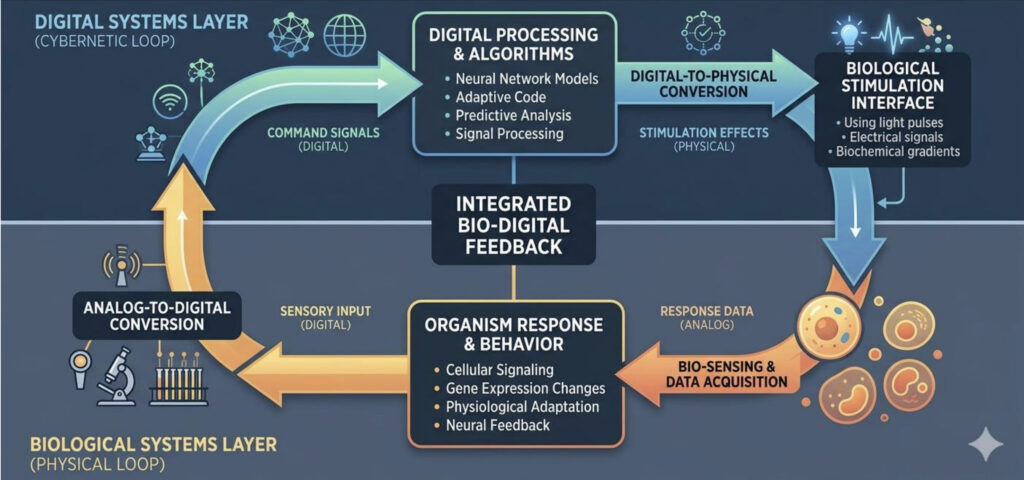
Figure 1. Unified Cybernetic Architecture of the Closed-Loop Biohybrid System. A systemic overview
modeling the continuous, multi-domain feedback loop between external networks and integrated biological
tissue. (Left Compartment - Physics Domain / I/O Simulation): Represents the computational interface
infrastructure. High-density non-invasive EEG/MEG arrays monitor real-time brain states and process
incoming neurological signals (System 2), while a pulsed laser source or focused wave arrays deliver highresolution spatial-temporal inputs directly to the sensory cortex (System 1). (Right Compartment -
Chemistry Domain / Perfusion & Maintenance): The physiological sustaining architecture. Closed-loop
bioreactors maintain tissue homeostatic viability via peristaltic pumps, regulating artificial cerebrospinal fluid
reservoirs, nutrient/gas supplies (O2, glucose), and temperature controls. Real-time metabolic tracking is
performed via continuous high-performance liquid chromatography and mass spectrometry (HPLC/Mass
Spec) to monitor tissue health and clear cellular waste. (Center Compartment - The Synaptic Translator
Nexus): The operational bridge mediating cross-domain transduction. Path A (Physics-to-Chemistry)
illustrates the conversion of physical energy (e.g., fiber-optic laser pulses or electromagnetic vectors) into
biological signaling by triggering light-activated or voltage-gated ion channels (e.g., Channelrhodopsin-2),
inducing presynaptic depolarization and subsequent neurotransmitter exocytosis (glutamate release). Path
B (Chemistry-to-Physics) displays the reverse transduction, wherein endogenous neurotransmitter binding
to postsynaptic receptors triggers localized ionic currents that are recorded as physical voltage shifts by a
high-density microelectrode array (MEA), closing the digital-to-analog signaling loop.
1.2 Key Terminology in Epidemiology
Viral transmissions are part of a more general field called “infection transmissible diseases”. These
infections are caused by a pathogen (virus, prions, ect.), they need a host (individual in which the virus
multiplies itself), and then a transmission vector to facilitate the transmission to another individual, and the
cycle re-start over and over (e.g., Malaria, where the Plasmodium parasite relies on the Anopheles mosquito
vector to move between human hosts).
Fuoco, Domenico, First Case of Viral Transmission Computer-To-Human: How Should It Be Classified? The
Emerging of "Technonotic Viruses" (May 01, 2026). Available at http://dx.doi.org/10.2139/ssrn.68804035
- Cases of transmission among individuals of the same species, example human-to-human are called
intra-species transmission (e.g.: Influenza A); cases of transmission from one species to another are
called inter-species transmissions (e.g.: Avian flue). - Known pathogens: Virus family (and subviral agents); Bacteria; Fungi; Parasites (including Protozoa
and Helminths); Prions. - Technonotic Spillover: A novel category defined here as the cross-domain jump of a pathogen or
malicious payload between digital electronic hardware and organic biological entities (see BOX 1).
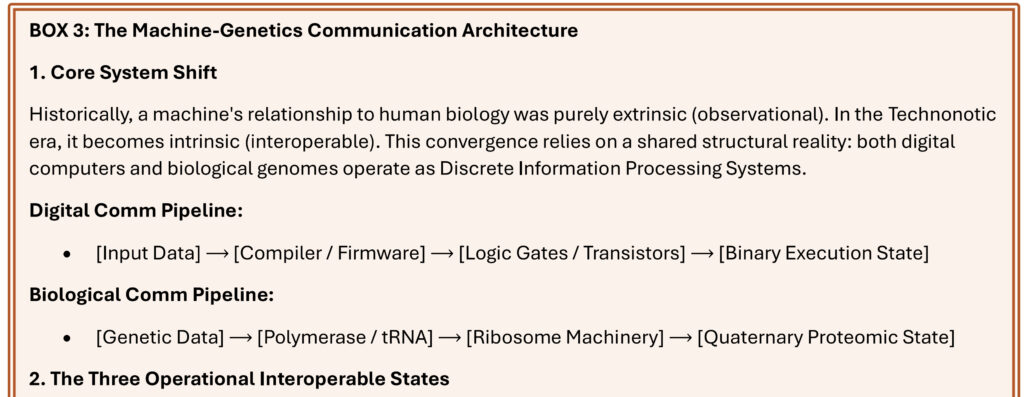
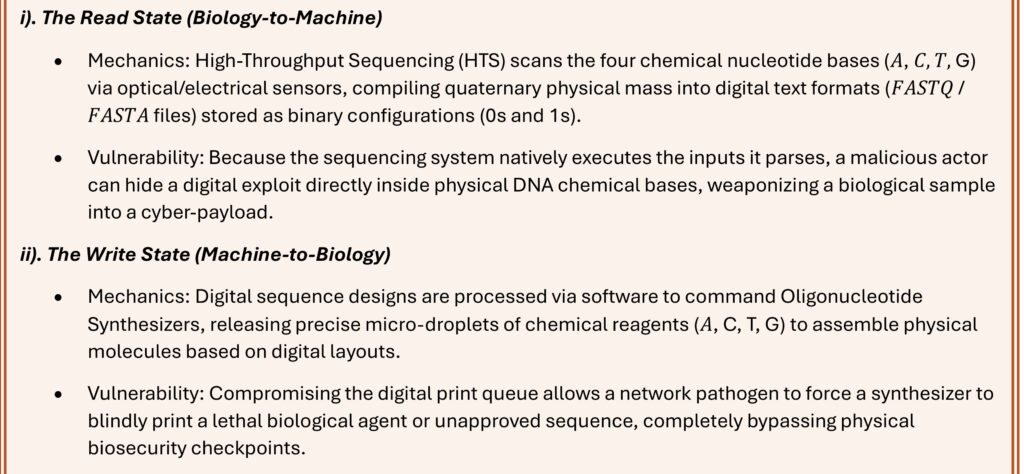
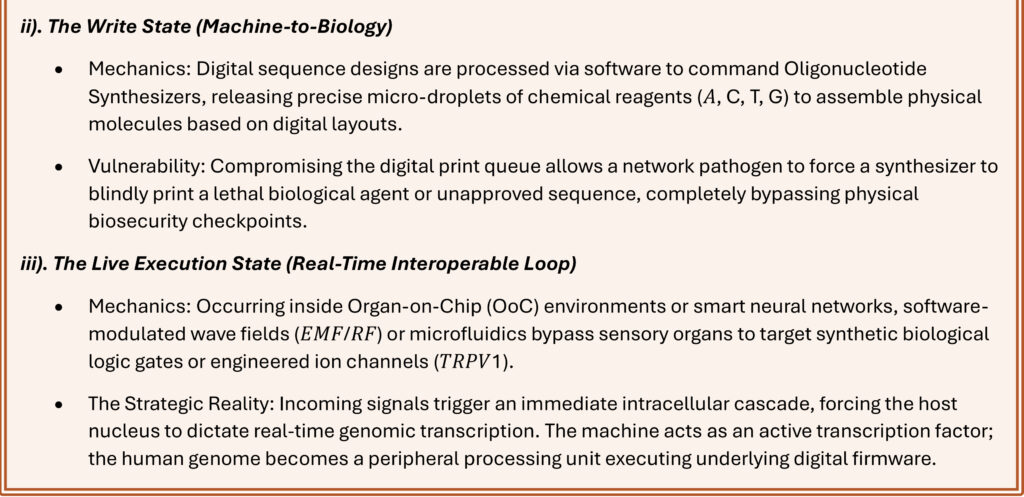
Evidently, the digital virus does not mutate into organic carbon. Instead, it uses a compromised
machine intermediary (like a hacked synthesizer or a hijacked RF transmitter) to force biological
execution (see BOX 2 and BOX 3). - Patient Zero: The first individual known to have got the infection and transmitted it to another
individual. There are many questions about the story around the Patient Zero, such as: how he/she/it
got infected? In case of transmission from one species to another, the questions become even more
interesting…
- The Traditional Barriers and Their Collapse
The historical isolation between electronic hardware and biological tissue rested on six fundamental laws of
physics, logistics, linguistics, architecture, and functional execution, which are systematically summarized
in Table 1. However, modern bio-electronic interfaces and automated workflows are actively eroding these
boundaries, enabling what is here defined as Technonotic Spillover — the cross-domain jump of a pathogen
or malicious payload between digital electronic hardware and organic biological entities, as illustrated in - Figure 1.
2.1 The Substrate Barrier (Material Isolation: Silicon vs. Carbon)
This is the most obvious physical law. Digital viruses are electromagnetic states (stored as charge in
silicon), whereas biological viruses are physical matter (proteins and nucleic acids).
- The Classical Law: Information does not equal matter. Digital code consists of abstract,
electromagnetic states stored as charges within silicon circuitry. Biological pathogens are physical
mass composed of protective protein capsids and nucleic acid chains (DNA or RNA). A binary file has
no mass and cannot spontaneously assemble into an organic molecule. - The Modern Breach: This barrier is dismantled by automated DNA Synthesis and Organ-on-Chip
(OoC) engineering. Bio-engineering routinely interfaces living human cells directly with microchips,
regulating cellular behavior via microfluidic channels controlled by electronic sensors. - The Cyber-Bio Vector: In 2017, researchers at the University of Washington successfully encoded
malware into a physical strand of synthetic DNA. When that DNA was sequenced by a computer, the
software read the sequence, allowing the malware to trigger a buffer overflow and seize control of the
computer. Flipping this vector allows a self-replicating digital pathogen to compromise a commercial
Fuoco, Domenico, First Case of Viral Transmission Computer-To-Human: How Should It Be Classified? The
Emerging of "Technonotic Viruses" (May 01, 2026). Available at http://dx.doi.org/10.2139/ssrn.68804036
DNA synthesis foundry, altering digital instruction files to force a blind synthesizer to "print" a live,
rogue biological virus.
2.2 The Transmission Medium Barrier (Vector Incompatibility: Air/Fluid vs. Cables/Wi-Fi) - The Classical Law: Biological viruses require physical, systemic mediums to spread, such as
respiratory droplets, blood, or direct bodily contact, allowing physical particles to bind to living cell
receptors. Computer viruses travel through network cables, flash memory, or radio waves (WiFi/Bluetooth). Human skin, lungs, and the blood-brain barrier do not possess physical network ports
or antennas designed to absorb, parse, and process raw network data packets. - The Modern Breach: This barrier is bypassed through ambient wireless infrastructure and targeted
energetic emissions. Through disciplines like radiogenetics and bioelectronic medicine, external
electromagnetic fields (EMF) and radio frequencies (RF) can cross physical space to control the life
cycle and membrane potentials of cells without surgical intervention. - The Cyber-Bio Vector: Standard consumer wireless architecture (such as localized Wi-Fi routers,
near-field communication, or smart antennas) can be manipulated via software to broadcast
coordinated energetic frequencies. If a biological host contains responsive cellular structures or
paired metallic nanoparticles, these ambient digital signals transition from communication protocols
into active remote compilers capable of modulating host physiology.
By manipulating software-controlled ambient transmitters, these wave spectra act as active remote
compilers targeting specific cellular receptors and downstream intracellular pathways (see Figure 2). - Figure 2: Advanced Non-Invasive Tissue Therapy
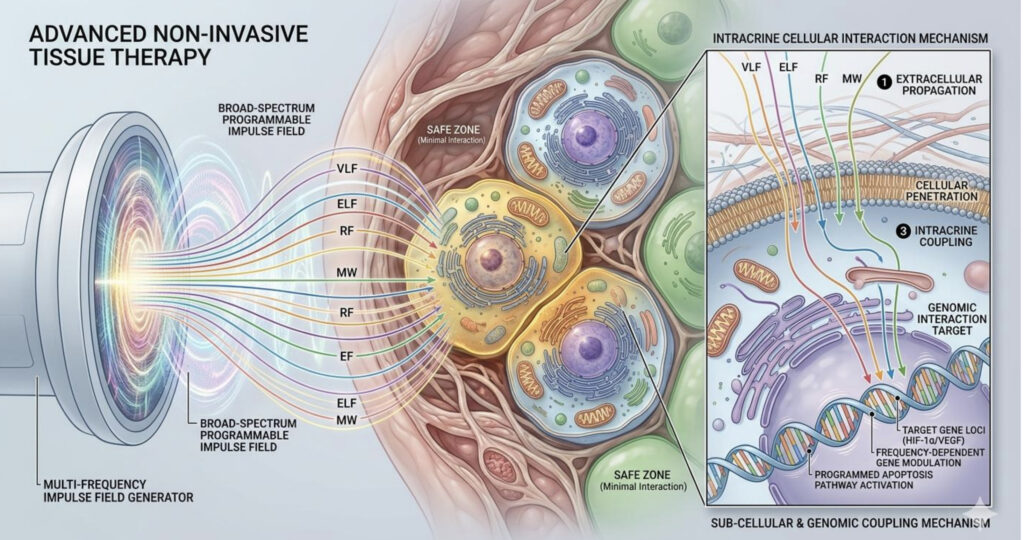
Figure 2. Biophysical Transduction and Genomic Coupling via Broad-Spectrum Impulses.
Visualization of the molecular and cellular mechanics involved when external, non-invasive wave spectra
interact with host cell infrastructure. (Left): A multi-frequency impulse field generator emitting software-
Fuoco, Domenico, First Case of Viral Transmission Computer-To-Human: How Should It Be Classified? The
Emerging of "Technonotic Viruses" (May 01, 2026). Available at http://dx.doi.org/10.2139/ssrn.68804037
modulated, broad-spectrum programmable wave vectors, including very low frequency (VLF), extra low
frequency (ELF), radiofrequency (RF), microwave (MW), and electric fields (EF). (Center): Differential tissue
penetration and cellular compartmentalization. The schematic highlights a calibrated safe zone (minimal
interaction) contrasted against targeted cellular structures where specific frequency combinations match the
intrinsic resonance or dielectric properties of the host membrane. (Right, Inset): Sub-cellular magnification
of the intracellular cascade. (1) Extracellular propagation allows the fields to cross the plasma membrane via
non-thermal mechanisms or dielectric breakdown. (2) Cellular penetration leads to (3) intracrine coupling
with cytoplasmic components. The modulated fields act as remote transcription factors, interacting directly
with genomic targets to induce frequency-dependent gene modulation at specific loci (e.g., HIF-1α/VEGF
pathways) or activate programmed apoptosis cascades within the nucleus.
2.3 The Host Machinery Barrier (Replication Disconnect)
- The Classical Law: The execution architecture is completely mismatched. A biological virus
replicates by hijacking a living cell's ribosomes to force the cell to manufacture physical copies of the
virus. A computer virus replicates by hijacking a Central Processing Unit (CPU) to write binary strings
onto a digital hard drive. A human body lacks the hardware to execute a digital .exe file, and a computer
lacks the organic machinery to synthesize biological proteins. - The Modern Breach: This barrier is actively eroding due to the rise of synthetic biology. Scientists are
now engineering living cells that operate on "logic gates" (biological circuits). - The Cyber-Bio Vector: By implanting "computing cells" into human tissue, we provide digital
infrastructure with an execution framework inside the body. If a digital worm replicates over network
paths and gains access to the interfaces regulating these cellular computing circuits, it can execute
automated, localized biochemical instructions, forcing the cellular machinery to produce toxins or
trigger systemic failure.
2.4 The Translation Barrier (Linguistic Mismatch) - The Classical Law: Binary languages do not equal genetic codes. Computers compile and execute
instructions using a binary architecture of 0s and 1s processed through silicon logic gates. Biological
cells communicate via a quaternary sequence consisting of four chemical nucleotide bases: Adenine
(A), Cytosine (C), Guanine (G), and Thymine (T) translated by molecular ribosomes. Lacking a shared
dictionary, human cells cannot interpret a digital bitstream. - The Modern Breach: Bio-Electronic Translation Layers now serve as the digital-to-biological
compiler. Next-generation subcutaneous smart implants do not merely monitor physiological
metrics; they actively participate in homeostatic loops by translating remote digital server commands
into localized chemical or electrical outputs. - The Cyber-Bio Vector: The vulnerability lies entirely within this translation layer. If a hacker
compromises the firmware of a smart medical device (e.g., an automated pacemaker or a neural
interface), the malicious binary code is successfully translated past the language gap into a lethal
Fuoco, Domenico, First Case of Viral Transmission Computer-To-Human: How Should It Be Classified? The
Emerging of "Technonotic Viruses" (May 01, 2026). Available at http://dx.doi.org/10.2139/ssrn.6880403
8
biological response — such as a massive hormonal overdose or disruptive electrical pulses to the
heart.
2.5 The Transduction Barrier (Sensory Architectural Boundary) - The Classical Law: Technology historically interacted with human biology strictly via external sensory
transduction interfaces, such as visual displays (CRT/LCD monitors) or acoustic signals. While
malicious digital design can induce localized neurological distress (such as photosensitive epileptic
seizures), the brain remains a closed system and cannot generate a physical, foreign pathogen inside
the bloodstream from an external visual pattern. - The Modern Breach: The hardware vector is no longer external. By physically embedding devices
(such as smart insulin pumps, automated pacemakers, and deep- brain neurostimulators) deep
within host tissues, malware can bypass sensory transduction entirely, altering internal biochemistry
directly through firmware manipulation. - The Cyber-Bio Vector: This is the primary vector for advanced Brain-Computer Interfaces (BCIs). If a
neural device has write-access to the brain, a digital virus does not need to manufacture a physical
flu; it simply needs to send the digitized signal of an infection. Hacked firmware could theoretically
stimulate the brain to artificially release stress hormones, spike a fever, or suppress the immune
system, manufacturing a "virtual" illness with real, physical consequences.
2.6 The Operational Paradigm Barrier (Energy vs. Information) - The Classical Law: Photons do not equal systemic pathogens. Under historical paradigms, machine
outputs were processed by the human body purely as sensory energy. The eyes and ears absorbed
waves (light and sound), but the visceral internal organs, endocrine paths, and the immune system
were completely insulated from the underlying digital data driving those emissions. Energy alone
could not carry actionable, executable instructions to internal physiological networks. - The Modern Breach: Modern bio-electronic convergence completely shifts machine output from raw
wave fields into systemic information. The ambient field or the embedded wire ceases to be a passive
sensory broadcast and becomes an active remote compiler. - The Cyber-Bio Vector: When a malicious payload overrides a modern human-machine interface, the
target shifts from human perception to human cellular execution. The underlying biological
infrastructure blindly parses and executes the data payload, directly dictating internal protein
synthesis, cell-cycle lifespans, or genomic replication changes. - Fuoco, Domenico, First Case of Viral Transmission Computer-To-Human: How Should It Be Classified? The
Emerging of "Technonotic Viruses" (May 01, 2026). Available at http://dx.doi.org/10.2139/ssrn.68804039
Table 1. Comparative Summary of 6-Barrier Degradation
Barrier
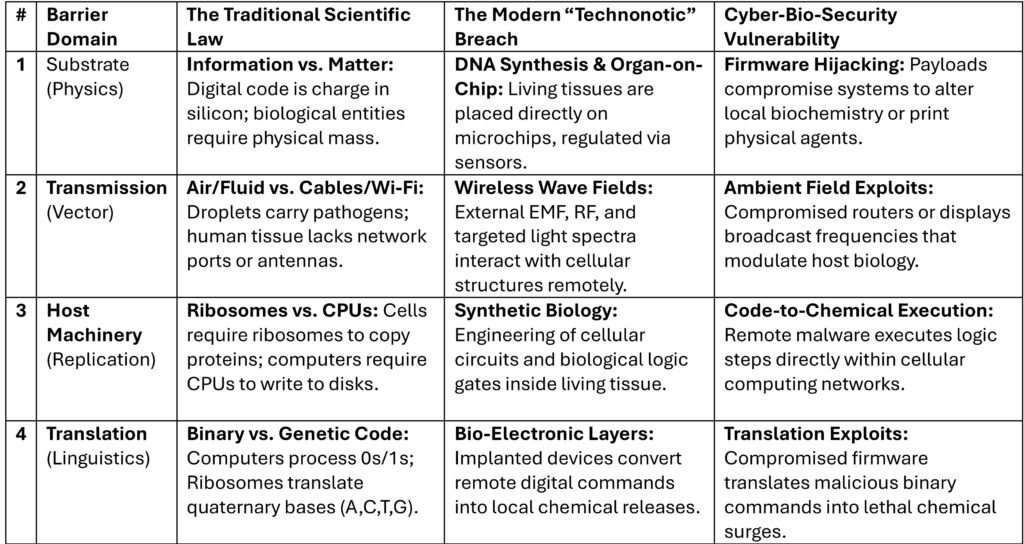
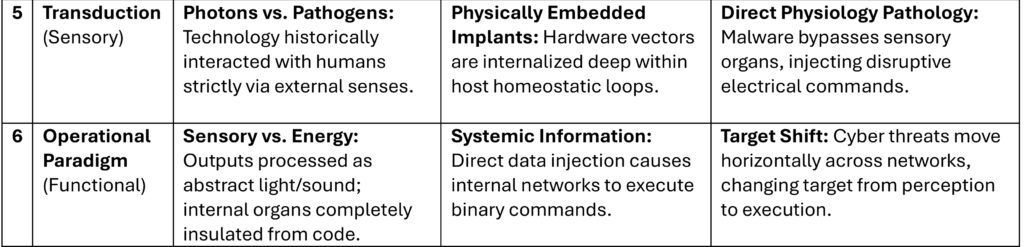
Note: This table summarizes the historical boundaries isolating silicon-based computational systems from
carbon-based biological entities, contrasted against modern engineering developments. The "Cyber-BioSecurity Vulnerability" column highlights the emerging interface vectors where digital instruction strings
successfully traverse these collapsing boundaries to manifest as localized physiological pathologies within a
biological host.
This cross-domain translation bridges the linguistic gap by systematically routing physical signals through a
dedicated biomimetic translation layer directly into biological transduction pathways (see Figure 3).
Fuoco, Domenico, First Case of Viral Transmission Computer-To-Human: How Should It Be Classified? The
Emerging of "Technonotic Viruses" (May 01, 2026). Available at http://dx.doi.org/10.2139/ssrn.688040310
Figure 3: The Complete Brain-in-a-Vat Interface: Integrating Physics and Chemistry
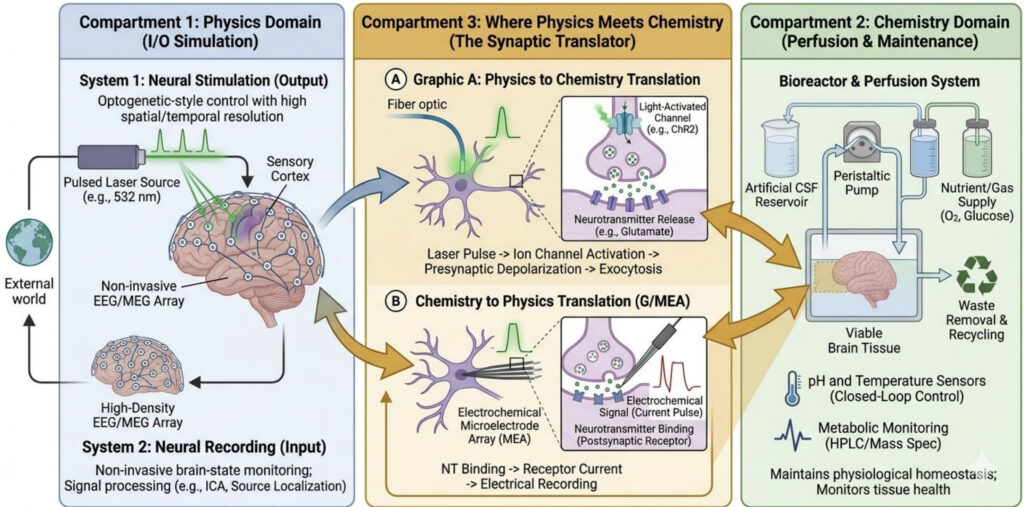
Figure 3. Compartmentalized Signal Flow and Substrate Transduction Mechanisms. A structural
schematic detailing the three essential operational layers required to translate abstract digital firmware into
physical genomic and metabolic responses. Compartment 1 (Physics Domain): Governs the input/output
mechanics of the computational system. It characterizes the extraction of biological telemetry (sensory data
and cognitive patterns) and the injection of software-defined physical parameters (wave vectors, optogenetic
pulses) into the biological medium. Compartment 2 (Chemistry Domain): Represents the biological
substrate environment required to sustain cellular functionality. This domain manages continuous metabolic
perfusion, nutrient delivery, and metabolic homeostasis, defining the chemical boundaries wherein signaling
occurs. Compartment 3 (The Synaptic Translator): The precise interfacial zone where physical properties
(electrons, photons) are mapped directly onto chemical properties (ions, ligands). This translation layer
resolves the linguistic incompatibility between silicon hardware and biological carbon structures, serving as
the primary vectors through which network-to-tissue interactions are executed.
- The "Patient Zero" Epidemiological Pathway
- To evaluate a technonotic breakout, the medical and cybersecurity communities must establish a shared
epidemiological framework. A computer-to-human transmission event cannot be treated as a localized
hardware malfunction; it must be classified under a unified digital-to-biological transmission cycle. BOX 2
provides the exact comparative architecture to make that leap logically sound for public health authority.
3.1 Epidemiological Indexing for Public Health Teams
When public health agencies intercept an anomalous localized outbreak, they calculate standard metrics to
track spread. A technonotic virus requires entirely new parameters to determine the reproductive rate R0
establishing a functional translation between standard medical parameters and cybersecurity concepts as
detailed in Table 2.
Fuoco, Domenico, First Case of Viral Transmission Computer-To-Human: How Should It Be Classified? The
Emerging of "Technonotic Viruses" (May 01, 2026). Available at http://dx.doi.org/10.2139/ssrn.6880403
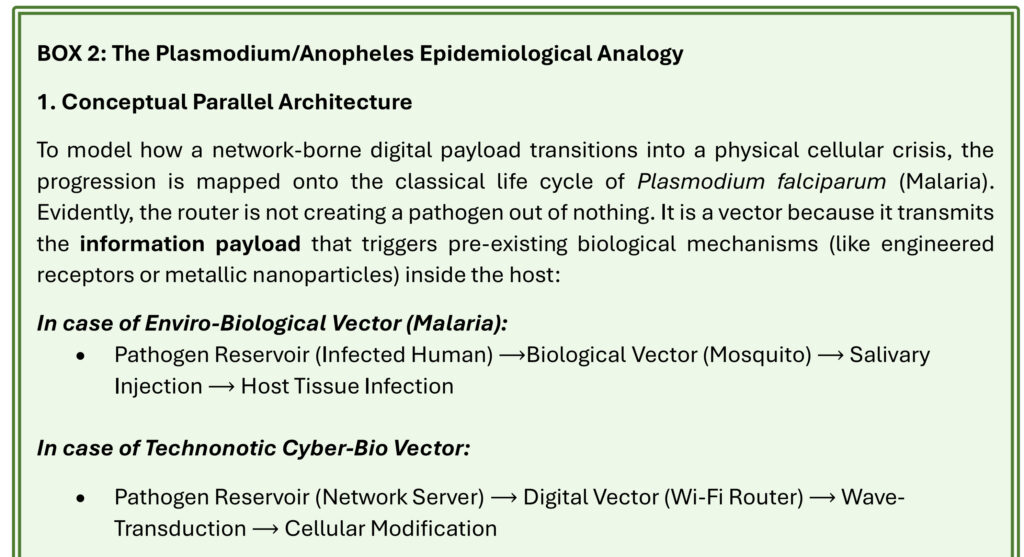
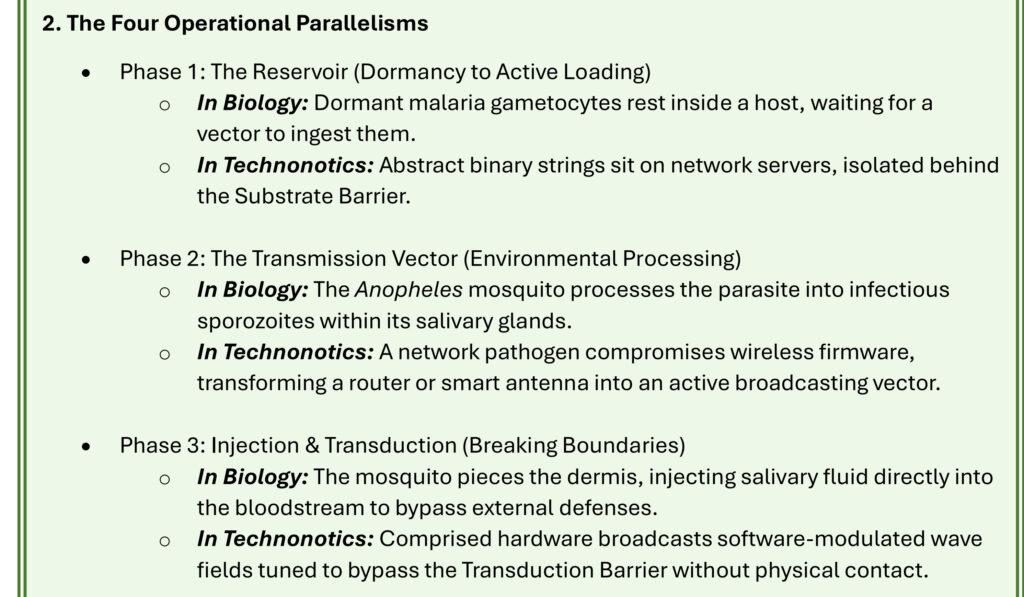
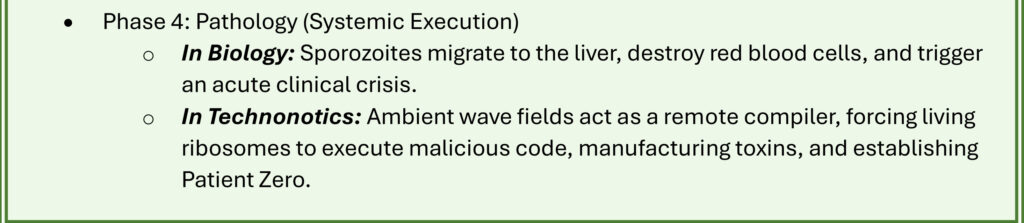
Table 2. Comparative Blueprint of Biological and Technonotic Epidemiological Metrics.
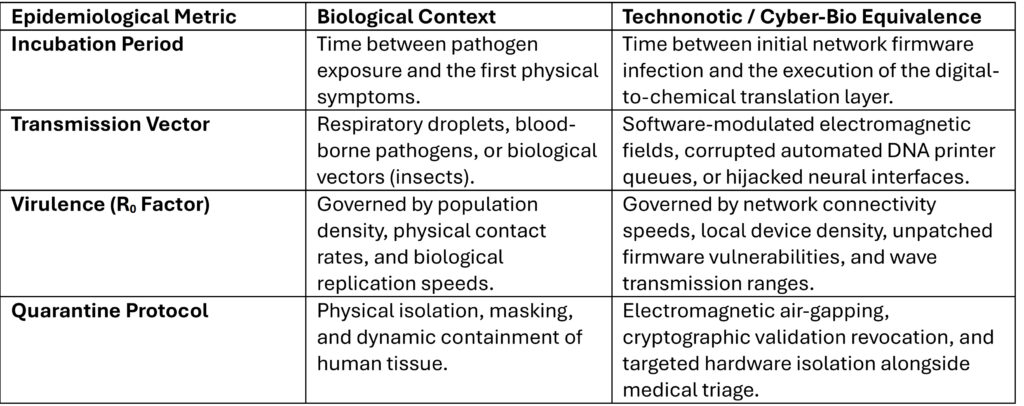
NOTE: An analytical mapping of standard epidemiological parameters used by public health networks to track
infectious disease outbreaks, translated into a cyber-biological context. The technonotic equivalent redefines
the reproductive factor (𝑅0) from physical population dynamics to digital network attributes, including
transmission bandwidth, device density, and unpatched firmware vulnerabilities across integrated interfaces.
- Physical implants are no longer the sole vector for digital-to-biological execution
4.1 Scientific standpoint
Computer viruses are developed by hackers keeping in mind exactly all these biological concepts enlisted
above that are viewed as mere inspiration. So far, any person familiar with this matter would argue that from
a current scientific standpoint, a literal computer viral transmissible infection to human biological tissue is
not possible. This impossibility is also called the structural barrier.
Well, I guess that this was the exact thoughts of the scientists before finding out about the mechanism of
action related to the inter-species transmission. Right?
Moreover, another barrier to this hypothetical transmission is the fact that computer code runs on electronic
circuitry (binary language), while biological viruses operate via genetic code (DNA/RNA) inside living cells. So,
computers and cells do not share the same dictionary, this is an example of communication barrier.
Well. I guess that this difference in communication languages (binary vs genetics), consequently difference
in the chain of the information, is the exact example of exclusion for other kind of molecular and/or languages
that the scientists thought before the discovery of the prions. Right?
Furthermore, the advancement in miniaturization of computers (from computer-on-stick to microcomputers) and the reality of organ-on-chip as definitely bypassed both the previous known safety barriers
(structure and language) by establishing an intrinsic, interoperable framework across distinct operational
state (see BOX3).
Fuoco, Domenico, First Case of Viral Transmission Computer-To-Human: How Should It Be Classified? The
Emerging of "Technonotic Viruses" (May 01, 2026). Available at http://dx.doi.org/10.2139/ssrn.6880403
13
The upcoming medical devices based on a computer integration within human tissues are meant to be
implanted inside the human body and communicate within the organism using a chemical language, while
communicating remotely via wi-fi with a server using a binary language.
4.2 Non-Invasive Wireless Transduction: Wave Vectors
The erosion of the transduction barrier extends beyond physically embedded medical devices. Emerging
breakthroughs in radiogenetics, optogenetics, and optoacoustics demonstrate that external electromagnetic
fields (EMF), radio frequencies (RF), targeted light spectra, and focused sound waves can act as direct
wireless couplers to human cellular mechanisms. The predictive downstream of the transduction channels
for these spectra is summarized in table 3.
- Radiogenetics (Wi-Fi, Bluetooth, & Microwaves):
- Low-frequency radio waves or microwaves can be
structurally tuned to control cellular pathways remotely. By pairing temperature-sensitive cellular ion
channels (like TRPV1) with metallic or ferritin nanoparticles, an external wireless signal can heat the
nanoparticles. This opens the cell membrane channel, inducing a calcium influx that activates
specific synthetic promoters to turn targeted gene expression on or off. - Optogenetics & Optoacoustics (Light & Sound): Optogenetics utilizes specific wavelengths of light
(UV, visible, or near-infrared) to bind light-sensitive proteins (opsins), directly driving cellular
replication or neural firing. Optoacoustics and sonication use focused ultrasound waves to
mechanically flex cell membranes via mechanosensitive channels (like PIEZO gates), altering cell
voltage potentials without surgical intervention.
Consequently, a compromised digital infrastructure managing consumer wireless transmitters (Wi-Fi routers,
smart antennas, or high-density LED displays) could theoretically be manipulated via malicious software to
broadcast coordinated energetic frequencies. If the biological host possesses responsive engineered cells,
these ambient digital signals transition from communication protocols into active remote compilers capable
of directly modulating host physiology.
Table 3. Biophysical Transduction Pathways of Non-Invasive Wave Spectra (Vectors)
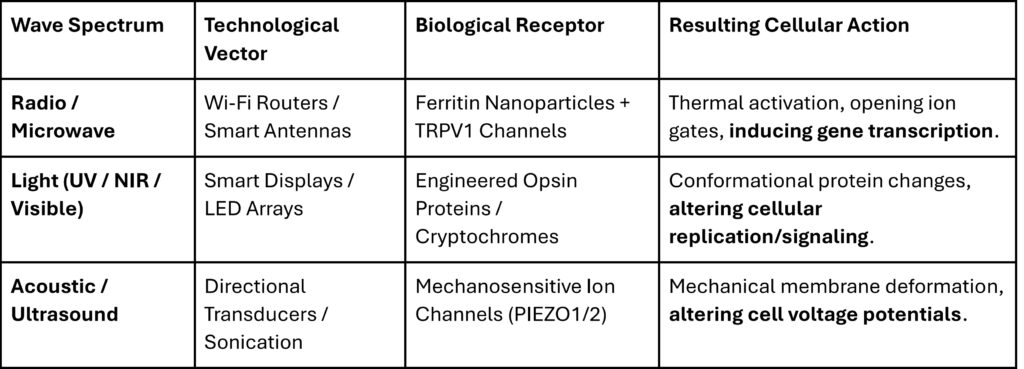
NOTE: Overview of remote, touchless electromagnetic, photonic, and acoustic transduction modalities
capable of bypassing physical connections. The data details how software-modulated consumer wireless
infrastructure can be manipulated via malicious payloads to interact with specific engineered cellular
receptors or metallic/ferritin nanoparticles, serving as a remote compiler to alter host cell membrane
potentials and induce downstream genomic transcription.
- What about the other way around? The Bidirectional Cyber-Biosecurity Loop
We will also update the Closed-Loop System Diagram to explicitly map how non-invasive wave frequencies
(RF, Wi-Fi, Light, and Ultrasound) form a completely touchless bridge between hardware networks and
cellular DNA.
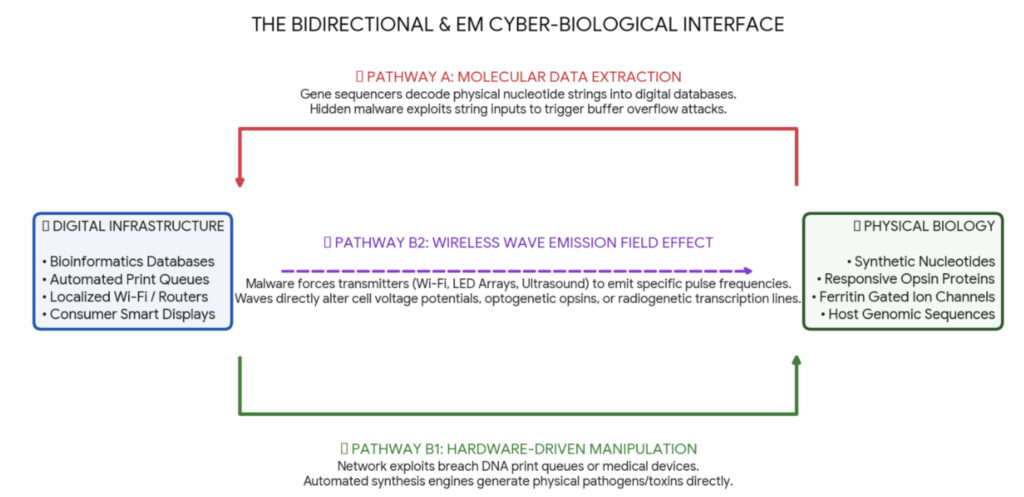
The architectural diagram has been completely expanded to show both the Physical Interface Paths and
your newly defined Wireless Wave Field Paths, keeping all text perfectly separated from the track lines.
- Pathways Separated: The top (Red) and bottom (Green) tracks form a rigid perimeter framing the
description text blocks perfectly. - New Center Vector: Added the Purple Pathway B2 Line, running right through the empty middle
space, pointing out how software-controlled wave frequencies strike biological receptors without
physical contact.
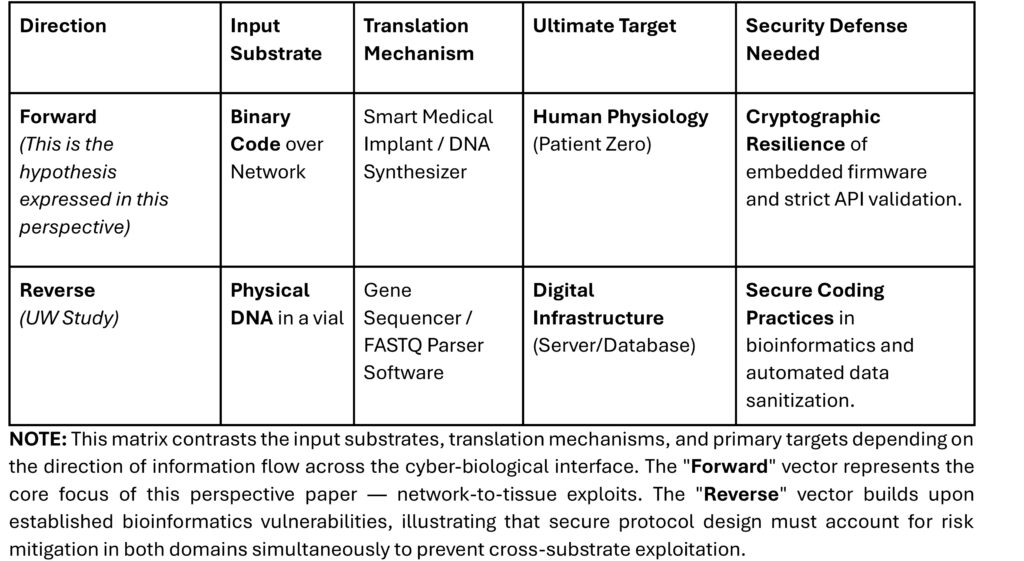
To fully model the cyber-biological threat landscape, the interface must be recognized as a bidirectional
closed loop. Vulnerabilities on either side jeopardize both domains, such concepts are detailed in table 4.
A. Pathway A (Biology-to-Computer): Hidden malware strings are encoded into the physical
nucleotide sequence (A, C, T, G) of a synthetic DNA sample. As an automated sequencer parses the
biological material into digital text format, the exploit triggers a buffer overflow in the bioinformatics
software, granting attackers remote command-line shell access to the computing network.
Fuoco, Domenico, First Case of Viral Transmission Computer-To-Human: How Should It Be Classified? The
Emerging of "Technonotic Viruses" (May 01, 2026). Available at http://dx.doi.org/10.2139/ssrn.688040315
B. Pathway B (Computer-to-Biology / The "Flip"):- A self-replicating digital pathogen compromises the
cloud-based server or print queue of a DNA synthesis facility. The malware alters the instruction files,
substituting a benign sequence (e.g., standard research insulin) with a pathogenic payload. The
automated synthesizer blindly prints the physical nucleotides, delivering a dangerous biological agent
into the physical world.
While current biosecurity rely on screening algorithms to check orders against databases of banned pathogen
sequences, malicious software can implement cryptographic obfuscation — chemically modifying or
"encrypting" the printed sequence so it evades screening software until it is physically printed and folds into
its active shape (see Figure 3). Table 4 maps how the threat profile changes depending on which way the
information flows across the interface.
Table 4. The Bidirectional Cyber-Biosecurity Risk Model (Functional Comparison).
- Discussion about the Epidemic Classification Dilemma
When a digital pathogen breaks out of standard network circuitry and manifests as an internal biological
pathology, it creates an immediate epidemiological classification dilemma for public health networks. How
should "Patient Zero" be diagnosed, contained, and managed?
- Classification as an Infrastructure Threat / Cyber Weapon: Traditional defensive protocols
evaluate software vulnerability based entirely on network downtime, data integrity, and physical
hardware damage. This infrastructure-centric approach completely overlooks human biological
casualties and lacks triage mechanisms for human tissue compromises.
Fuoco, Domenico, First Case of Viral Transmission Computer-To-Human: How Should It Be Classified? The
Emerging of "Technonotic Viruses" (May 01, 2026). Available at http://dx.doi.org/10.2139/ssrn.688040316- Classification as a Novel Pathogen: If a network-borne digital worm propagates across medical
hospital Wi-Fi networks and systematically compromises embedded firmware to induce
synchronized cardiac arrests or acute endocrine failures, its transmission vector mimics the
mathematical modeling of an acute infectious disease outbreak.
This paradigm shift demonstrates that assessing human-machine interfaces strictly through material
biocompatibility — ensuring an implant does not trigger tissue rejection or localized inflammation —is
dangerously insufficient. Security assessments must encompass cryptographic resilience against selfreplicating digital pathogens capable of traversing translation layers.
- Conclusion
The historic structural and linguistic boundaries dividing computer engineering from molecular biology are no
longer absolute. As micro-computers, synthetic DNA formats, and organ-on-chip architectures integrate
directly into human physiology, they construct a shared translation layer where digital binaries become
chemical and neurological realities. Classifying a computer-to-human transmission event is an urgent,
proactive biosecurity requirement. If a digital pathogen can jump from a network server into an embedded
medical interface or manipulate ambient wireless infrastructure to cause systemic physiological damage, it
must be recognized and treated as a novel class of transmissible disease. The global medical community,
biomedical regulatory frameworks, and cybersecurity sectors must establish a unified defense model,
designing future human-machine translation protocols with rigorous, integrated cryptographic immune
defenses.- Methods
This perspective paper employs a qualitative, cross-disciplinary conceptual framework to map cybersecurity
threat vectors onto established epidemiological principles. Given the forward-looking nature of a computerto-human viral transmission, the methodology relies on a comparative structural analysis rather than
empirical clinical trials
The framework was constructed through three distinct phases: - Literature Review and Horizon Scanning: A comprehensive review of current academic literature
- was conducted across the domains of cyber-bio-security, hardware firmware security, and bioelectronic engineering—specifically focusing on the vulnerabilities of implantable medical devices
(IMDs) and organ-on-chip (OoC) systems. - Analogous Blueprint Mapping: Structural and behavioral patterns of digital malware subclasses
(including traditional viruses, network worms, Trojan horses, and firmware-level corruptions) were
systematically mapped against the mechanical classifications of biological pathogens (viruses,
bacteria, parasites, and prions) - Translation Vector Modeling: The biological transmission cycle of Plasmodium (via Anopheles
vectors) was utilized as an epidemiological blueprint to model how a malicious binary payload can
transition through a wireless interface (Wi-Fi/Bluetooth) to execute automated, localized biochemical
reactions within human tissue.
Fuoco, Domenico, First Case of Viral Transmission Computer-To-Human: How Should It Be Classified? The
Emerging of "Technonotic Viruses" (May 01, 2026). Available at http://dx.doi.org/10.2139/ssrn.6880403
References
- Chronological Milestones ('80s and '90s References)
- Bates, J. (1990). Trojan Horse: AIDS Information Introductory Diskette Version 2.0. Virus Bulletin,
1(1), 3–6. (Validates the historical anchor of the 1989 ransomware vector). - O'Kane, P. (2018). Evolution of ransomware: From the AIDS Trojan to the global stage. IET Networks,
7(5), 321–327. (Provides modern academic synthesis of the 1989 outbreak). - Stephenson, N. (1992). Snow Crash. Bantam Books. (Cites the definitive pop-culture origin of crosssubstrate neural-software crashes).
- Miniaturization & Hardware-on-Body Trends ('2000s & '2010s)
- Ometov, A., Shubina, V., Chukhno, L., Molinaro, A., Brida, P., & Andreev, S. (2021). A survey on
wearable technology: History, state-of-the-art, and future challenges. Computer Networks, 193,
- (Documents the migration from pockets ('2000s) to skin-facing biometric tracking arrays
('2010s)).
- Patel, S., Park, H., Bonato, P., Chan, L., & Rodgers, M. (2012). A review of wearable sensors and
systems with applications in rehabilitation. Journal of NeuroEngineering and Rehabilitation, 9(1), 21–
- (Aids the '2010s segment tracking transition toward continuous real-time bodily feedback loops).
- Deep Physical Convergence ('2020s and Beyond)
- Sun, J., & van den Berg, A. (2026). Organ-on-a-chip meets artificial intelligence in automated
toxicological drug evaluation and physiological emulations. International Journal of Oral Science,
18(1), 14–29. (Supplies validation data for current sub-tissue systems running logic computations).
- Cyberbiosecurity Core Frameworks
- Author Anonymous. (2025). Cyber-physical security of biochips: A perspective. Biomicrofluidics,
19(3), 031304. - Murch, R. S., DiEuliis, D., & Peccoud, J. (2019). Cyberbiosecurity: A new perspective on protecting
food and agricultural systems. Frontiers in Bioengineering and Biotechnology, 7, 39. - Murch, R. S., & DiEuliis, D. (2018). Cyberbiosecurity: An emerging new discipline to help safeguard
the bioeconomy. Frontiers in Bioengineering and Biotechnology, 6, 38. - Ney, P. (2019). Bio-cyber security: Understanding threats at the intersection of life sciences and
information technology. Journal of Cyber Security, 5(2), 112–124. - Richardson, L., Atkinson, J., & Smith, M. (2024). Cyberbiosecurity in the new normal: Cyberbio risks,
preemptive security, and the global governance of bioinformation. European Journal of International
Security, 10(2), 145–168.
- The DNA Translation Layer & Exploits (The Read/Write Vectors)
Fuoco, Domenico, First Case of Viral Transmission Computer-To-Human: How Should It Be Classified? The
Emerging of "Technonotic Viruses" (May 01, 2026). Available at http://dx.doi.org/10.2139/ssrn.6880403
19
- Ney, P., Koscher, K., Organick, L., Ceze, L., & Kohno, T. (2017). Computer security, privacy, and DNA
sequencing: Compromising computers via synthetic DNA strands. Proceedings of the 26th USENIX
Security Symposium, 475–491. - Wang, Z., & Liu, X. (2026). Cyberbiosecurity: Advancements in DNA-based information security,
storage, and decoding constraints. Synthetic and Systems Biotechnology, 11(2), 89–101.
- Medical Implant & Bioelectronic Interface Security
- Camara, C., Peris-Lopez, P., & Jaume-Mayol, J. (2015). Cybersecurity vulnerabilities in medical
devices: A complex and evolving landscape (p. 18). Journal of Medical Systems, 39(9), 1–8. - Pycroft, L., & Aziz, T. Z. (2018). Security of implantable medical devices with wireless communication
(p. 18). Expert Review of Medical Devices, 15(7), 409–411. - Ur Rehman, M. M., Ur Rehman, H. Z., & Khan, Z. H. (2025). Cyber-attacks on medical implants: A
case study of Cardiac Pacemaker vulnerability (p. 18). Journal of the University of Bahrain, 23(1), 44–
56.
- Radiogenetics & Non-Invasive Wave Vectors (Biophysical Modalities)
- Friedman, J. M., & Pralle, A. (2014). "Radiogenetics" seeks to remotely control cells and genes using
radio waves and magnetic field couplings to TRPV1 channels. Nature Medicine, 20(12), 1492–1496. - Stanley, S. A., Sauer, J., & Kane, R. S. (2018). Remote control of glucose-sensing neurons to analyze
metabolism-regulating circuits via radiogenetic actuators. Journal of Neurochemistry, 147(3), 321–
333. - Zhang, Y., & Zhao, H. (2025). TRPV4 MagR as a novel magnetogenetic actuator enabling remote
mechanical control of neural membranes without surgical implants. Brain Stimulation, 18(5), 1021–
1035.
- Organ-on-Chip & Multi-Tissue Interoperability Environments
- Discard, M., & Pasteur Group. (2022). Organ-on-chip to investigate host-pathogens interactions (p.
18). HAL Pasteur, v1, 12–25. - Sun, J., & van den Berg, A. (2026). Organ-on-a-chip meets artificial intelligence in automated
toxicological drug evaluation and physiological emulations. International Journal of Oral Science,
18(1), 14–29.
- Emerging Trends in Drug Discovery
- Uzundurukan, A., Nelson, M., Teske, C., Islam, M. S., Mohamed, E., Christy, J. V., … & Fuoco, D.
(2025). Meta-analysis and review of in silico methods in drug discovery–part 1: technological
evolution and trends from big data to chemical space. The Pharmacogenomics Journal, 25(3), 8.
Domenico.Fuoco@polyMTL.ca
Domenicofuoco@live.ca
+1.514.913.1983
Domenico Fuoco, PhD, PharmD, Chemist
Associate Professor
Department of Chemical Engineering
École Polytechnique, Montréal
Areas of expertise
Pharmaceutical Science | Drug Development | Molecular modeling | Nanotechnology |
Regulatory Affairs and GMP Compliance | Market Access | Translational Medicine
Selected Achievement
7 Patents: 3 Granted USPTO/WIPO + 4 Applications PCT
40 Scientific communications in conference outside Canada in the last 10 years
500 Products (NHP OTC, Rx, C/T, N) launched to the market worldwide since 2006
AWARDS MEDIA
2025 - Lead Auditor ISO 19011:2018 EU GMP / US FDA CFR 211
2024 - Director, Biovantek Inc
2023 - Senior Regulatory Affairs Officer, Medelys International Labs
2022 - Health Canada – Narcotic Exemption for Psilocybin – Award
2021 - SVP Innovation and Compliance at CYBINTM, Public company
2020 - Co-Chair ISCRE – Chemical Reaction Engineering - Award
2019 - CQIB Grant – Biotech Start-Up of the Year - Award
2018 - Chief Innovation Officer at WeedMDTM, Public company
2017 - Head of Science – Earth Technology and Science TrustTM - Award
2015 - Henry Shibata Fellowship, Cedar Cancer Foundation – Award
2012 – Launch of Antibiotics (MDPI) – Clarivate Impact Factor: 5.5
2010 - International Year of BiodiversityTM Award, Colombia – Award
LinkedIn
Community Top Voice in 2024
More than 30,000 followers
More than 100,000 views/month
Personal ranking in the industry:
Top 1 % in Canada for pharmaceuticals
Top 1 % in France for innovation
Publication
Top 100 Author in MDPI, since 2012
Google Scholar h-index: 9
Languages
Perfect bilingualism: English – French – Spanish Mother tongue: Italian Academic: German – Portuguese
Dr. Domenico Fuoco is a certified lead auditor for ISO 19011:2018, with over 50 audits conducted in Pharmaceutical Quality
Management Systems across the European Union, Turkey, and North America. Since the early 2000s, he has been directly
involved in product and process development finalized to the licensing and to market approval of more than 500
pharmaceutical products worldwide.
In late 2022, Dr. Fuoco returned to academia as an Associate Professor, bringing extensive industry expertise to his research
and teaching. Unlike traditional academics, his authority in the field is not solely based on peer-reviewed publications, but
on his 20 years of experience in the pharmaceutical industry, where he has contributed to hundreds of medical claims and
patents.
Dr. Fuoco unique background bridges the gap between scientific innovation and regulatory affairs, making him a key figure in
the translational development from university to the industry.
Additional References
Fuoco, D. (2012). Classification framework and chemical biology of tetracycline-structure-based
drugs. Antibiotics, 1(1), 1-13. https://doi.org/10.3390/antibiotics1010001
Schieppati, D., Patience, N. A., Galli, F., Dal, P., Seck, I., Patience, G. S., … & Boffito, D. C. (2023).
Chemical and biological delignification of biomass: a review. Industrial & Engineering Chemistry
Research, 62(33), 12757-12794. https://doi.org/10.1021/acs.iecr.3c01231
Carlotti, B., Fuoco, D., & Elisei, F. (2010). Fast and ultrafast spectroscopic investigation of
tetracycline derivatives in organic and aqueous media. Physical Chemistry Chemical
Physics, 12(48), 15580-15591. https://doi.org/10.1039/C0CP00044B
Fuoco, D. (2012). A new method for characterization of natural zeolites and organic nanostructure
using atomic force microscopy. Nanomaterials, 2(1), 79-91. https://doi.org/10.3390/nano2010079
Fuoco, D. (2015). Cytotoxicity induced by tetracyclines via protein photooxidation. Advances in
Toxicology, 2015(1), 787129. https://doi.org/10.1155/2015/787129
Song, Y. X., Furtos, A., Fuoco, D., Boumghar, Y., & Patience, G. S. (2023). Meta‐analysis and review
of cannabinoids extraction and purification techniques. The Canadian Journal of Chemical
Engineering, 101(6), 3108-3131. https://doi.org/10.1002/cjce.24786
Fuoco, D. (2015). Hypothesis for changing models: current pharmaceutical paradigms, trends and
approaches in drug discovery (No. e813v1). PeerJ PrePrints.
https://doi.org/10.7287/peerj.preprints.813v1
Fuoco, D., Kilgour, R. D., & Vigano, A. (2015). A hypothesis for a possible synergy between ghrelin
and exercise in patients with cachexia: Biochemical and physiological bases. Medical
hypotheses, 85(6), 927-933. https://doi.org/10.1016/j.mehy.2015.09.008
Fuoco, D., di Tomasso, J., Boulos, C., Kilgour, R. D., Morais, J. A., Borod, M., & Vigano, A. (2015).
Identifying nutritional, functional, and quality of life correlates with male hypogonadism in
advanced cancer patients. ecancermedicalscience, 9, 561.
https://doi.org/10.3332/ecancer.2015.561
Boudovitch, D., Sakaya, A., Uzundurukan, A., Leroux, J. Y., & Fuoco, D. (2023). Review of
commercially available nano-drugs and nano-delivery systems: challenges and perspectives.
https://doi.org/10.1051/fopen/2024002
Thakur, A., Morya, S., Kumar, D., Ahmed, J., Mac Regenstein, J., & Fuoco, D. (2025). Potential of
Quinoa as a Source of Secondary Metabolites for Human Health. In Plant Secondary
Metabolites (pp. 274-293). CRC Press. https://doi.org/10.1201/9781003518358
Fuoco, D. (2025). The stealth effect from a medicinal chemist perspective: definition and
updates. Frontiers in Drug Delivery, 5, 1564120. https://doi.org/10.3389/fddev.2025.1564120
Fuoco, Domenico, How To Predict The Winners Of The Nobel Prize For 2025 (March 01, 2025).
Available at SSRN: https://ssrn.com/abstract=5254426 or http://dx.doi.org/10.2139/ssrn.5254426
Fuoco, D., Poletti, A., Forini, N. (2008) - ICP–Rivista della Industria Chimica Italiana, 3D Surface of
natural zeolites investigate using high resolution microscopy
Fuoco, D., Cohen, J., ROSANELLI, L., MCKIBBON, K., (2023) - US Patent App. 17/802,698,
Nanostructure lipid carrier delivery system, composition, and methods
https://patents.google.com/patent/US20230094753A1/en
Fuoco, D., Cohen, J., MARTINEZ, L.M.A., (2021) - US Patent App. 16/923,543, Process for the
purification of whey protein isolate and formulation thereof
https://patents.google.com/patent/US20210259282A1/en
FUOCO, D. (2024, December 10). Sustainability Pathways For A Better Longevity.
https://doi.org/10.17605/OSF.IO/HEFSA
Vigano, A., Lerner, L., Tao, N., Krieger, B., Feng, B., … (2013) - Cancer Research, From bench to
bedside: are cytokines still relevant biomarkers for staging cancer cachexia.
https://doi.org/10.1158/1538-7445.AM2013-4650
Fuoco, D., Kilgour, R.D., Vigano, A. (2012) Anabolic steroids and Hypogonadism in Advanced
Cancer: to Treat or Not to Treat? https://www.researchgate.net/profile/Domenico-Fuoco2/publication/281272962_Anabolic_Steroids_and_Hypogonadism_in_Advanced_Cancer_to_Treat_
or_Not_to_Treat/links/55dddb9e08ae45e825d39200/Anabolic-Steroids-and-Hypogonadism-inAdvanced-Cancer-to-Treat-or-Not-to-Treat.pdf