
Kolkata: A City That Can Be Smelled

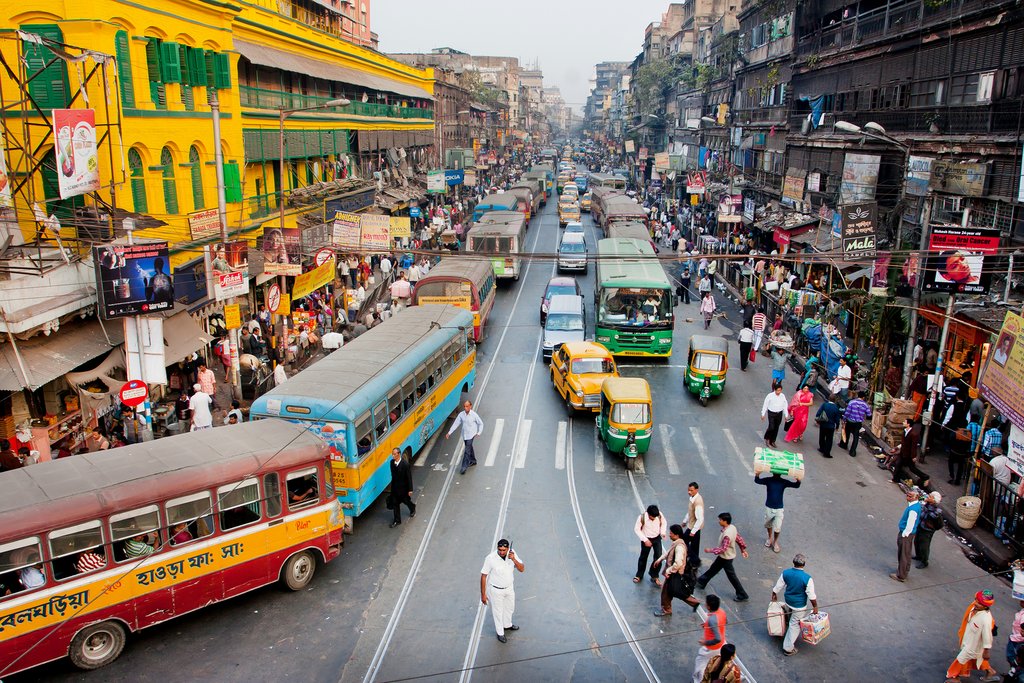
Google Maps may tell you where you are. A Kolkatan's nose usually gets there first.
Think about it.
Long before you see a signboard, a crossing, or a familiar building, there is often a smell that
tells you exactly where you've reached. Over the years, while travelling across the city for
work, meetings, family functions and the usual everyday errands, I have realised that Kolkata
has an invisible map. Not a map of roads or landmarks, but a map of smells.
And not all of them are pleasant.
Anyone coming from the airport towards the city via the Eastern Metropolitan Bypass knows
the moment I am talking about. Somewhere near ITC Sonar and the Dhapa stretch, a familiar
pungent smell suddenly enters the vehicle. Windows go up almost automatically. Nobody
needs to ask where they are. Everybody already knows.
You may not like the smell, but you certainly cannot miss it.
For many Kolkatans, it has become an unofficial welcome to the city. No signboard is
necessary. The nose has already figured it out.
Thankfully, Kolkata offers plenty of better fragrances after that.
Near Exide and Rabindra Sadan, the city changes character completely. The air often carries
the smell of pure ghee, freshly fried bhujias, kachoris and sweets. You don't need to see the
shops. Your nose has already informed you. It is the smell of post-office snacks, theatre
evenings, festival shopping and the eternal Bengali belief that every occasion can be
improved with something fried.
Move towards Park Circus and another fragrance takes over. Biryani. Kebabs. Grilled meat.
Spices.
Park Circus probably has the easiest smell to identify in the city. Even with your eyes closed,
there is a fair chance you would guess where you are. The aroma seems to hang permanently
in the air, especially during the evenings. I have lost count of the number of times I have
passed through the area after a full meal and still felt hungry again.
Taratala has its own identity. Depending on which way the wind is blowing, you might catch
the smell of freshly baked biscuits mixed with soap and consumer products from nearby
factories. It sounds like a strange combination, but somehow it works. There cannot be too
many places in the world where biscuits and soap share the same airspace so comfortably.
Dalhousie around lunchtime deserves a category of its own. Tea, egg rolls, chowmein, fish
fry, cutlets, curries, sweets and countless other foods compete for attention. Walking through
the area at one o'clock in the afternoon is a dangerous exercise if you're trying to stick to a
diet. The smell alone can make you postpone lunch plans and start looking for the nearest
food stall.
Then there is College Street.
The smell there is difficult to describe unless you have experienced it. Old books. Dust.
Printing ink. Tea. A little bit of history. A little bit of nostalgia. It is the smell of
examinations, second-hand textbooks, intellectual arguments and students trying to convince
themselves they still have enough time before the exam.
Few places in Kolkata announce their South Indian influence as clearly as Lake Market. Walk
through the neighbourhood and a distinctive aroma often hangs in the air. The scent of freshly
ground coffee beans mixes with curry leaves, sambar powder, rasam masala and spices from
the many specialty grocery stores in the area.
For a few moments, it feels less like South Kolkata and more like a small corner of Chennai
that somehow settled here decades ago. In a city where many food aromas revolve around
sweets, fish and biryani, Lake Market offers something completely different.
Kumartuli has perhaps the most emotional smell in the city. Wet clay, straw, paint and river
mud fill the air in the months before Durga Puja. Even before you see an idol taking shape,
you know what is happening.
Puja is coming.
The Maidan has its moment too. Visit after rain and you will smell wet grass and fresh earth.
In a crowded city full of traffic and concrete, that fragrance feels almost luxurious. It is one of
those smells that makes you slow down for a moment, even when the city around you is in a
hurry.
And then there is Howrah Bridge.
Every time I cross the bridge from Howrah towards Kolkata, I find myself waiting for that
familiar burst of fragrance. As the bridge begins to descend towards Burrabazar, a wave of
floral aroma suddenly rises from below. Before you see the source, you smell it.
The source, of course, is the flower market beneath the bridge.
Travel in the opposite direction and the experience is much the same. For a brief moment,
marigolds, roses, jasmine and tuberoses overpower the smell of traffic and exhaust fumes. It
is one of the few places where one of the busiest bridges in the world briefly smells like a
garden.
Near Howrah Station, the fragrance changes again. Diesel. Tea. Freshly cooked food.
Newspapers. Thousands of people arriving, leaving, waiting and rushing.
It is the smell of journeys.
Taken individually, these smells may not seem important.
Together, however, they form a map of Kolkata that exists only in the minds of people who
live here.
The pungent reminder of Dhapa. The ghee of Exide. The biryani of Park Circus. The biscuits
of Taratala. The lunch-hour feast of Dalhousie. The books of College Street. The coffee and
sambar of Lake Market. The clay of Kumartuli. The grass of the Maidan. The flowers
beneath Howrah Bridge.
Some smells make us hungry.
Some make us nostalgic.
Some make us smile.
Some make us roll up the car windows.
But all of them tell us exactly where we are.
Perhaps that is why Kolkata stays with people long after they leave. It isn't just a city that can
be seen or heard.
It's a city that can be smelled.
And if you have lived here long enough, chances are your nose already knows the rout