One Day That Stayed With Me
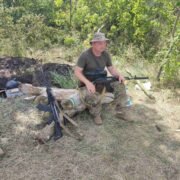
Over these years, my uniform has become part of everyday life. But underneath it, I remain an ordinary person. I want to go home, to be healthy, to make plans and know that I will have time to carry them out. I am still serving. My legs and joints hurt, and I need treatment. There are also memories that are difficult to describe, even when I have chosen to write about them.
One is from September 2022.
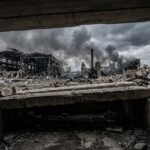
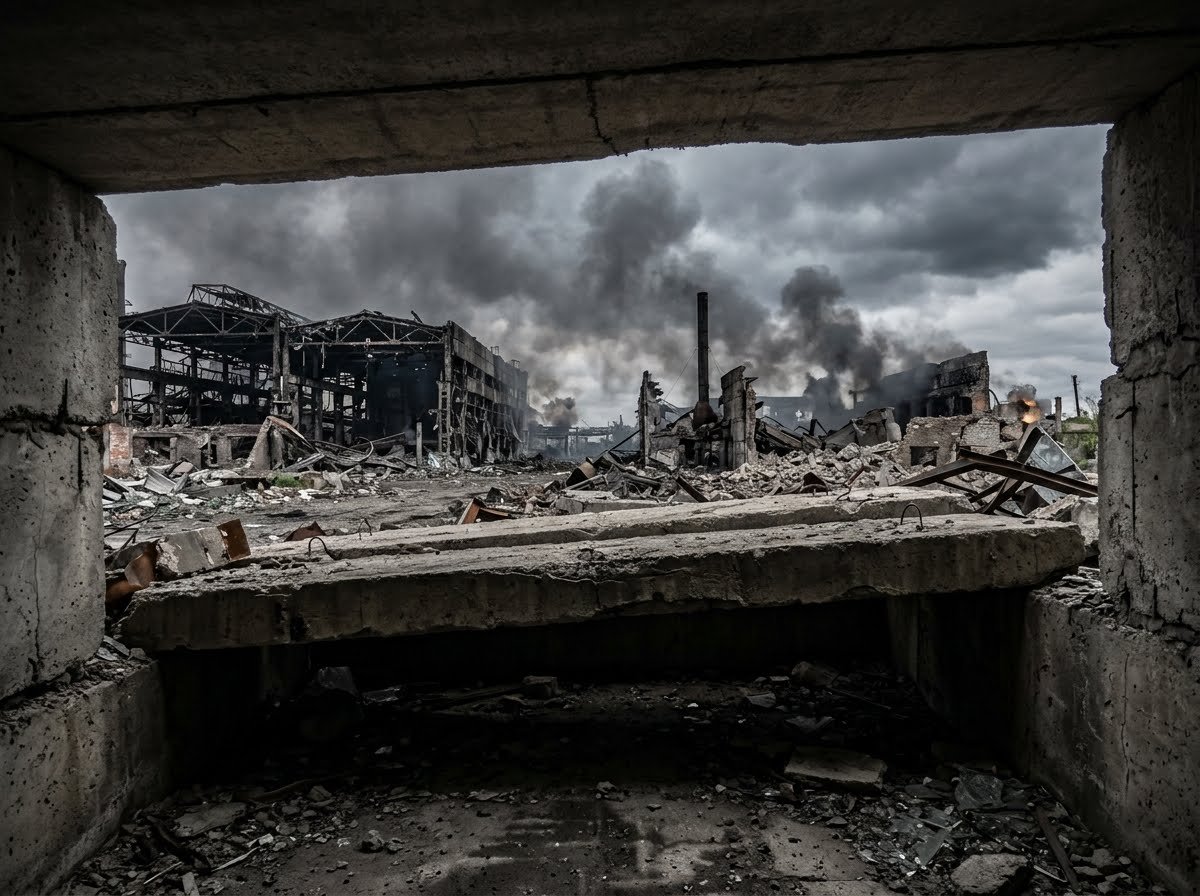
We were at a large glass factory in the Luhansk region. Shelling woke us. The Russians had found our position.
It seemed they were firing everything they had at us. I remember Grad rockets and cluster munitions. At the time, I also thought air-dropped cluster bombs were being used, although I could not identify them with certainty.
We went down into the basement. Two tanks, several vehicles and a BMP-2 infantry fighting vehicle were there. We sheltered beside the equipment, behind concrete, while the explosions continued above.
Then we heard barking.
It was our dog, Druzhok. A fragment had wounded his leg. One of my brothers-in-arms went outside to help him. In the middle of all this, a man heard a wounded dog and went to save him.
I looked outside through a gap between the concrete slabs. My commander was there.
At that moment, a shell exploded at his feet.
I saw the blast tear his body apart. An arm was thrown one way, his legs another. His head, still in its helmet, was hurled in my direction. Where he had just been standing, his torso remained in its body armour, with his entrails exposed.
As I write these words, I understand how terrible they are to read. But I saw this with my own eyes, through that gap between the concrete slabs. There was so little space between us. Then he was dead, and I was still alive.
His body armour was still on him. Something meant to protect a person was now covering what remained of his body.
Deaths like this are difficult to speak about. It is harder still to think about what comes after the explosion. The dead must be recovered. The parts of a person's body must be found and gathered so that he can be brought home.
Try to imagine how difficult it is to gather the remains of someone you knew alive. To understand that this is your commander or your brother-in-arms, someone you served alongside. You have to bend down, lift, carry. You have to continue doing this work, even when the thought of it feels unbearable. Because you cannot leave him there.
After a death like this, the funeral often takes place with a closed coffin. Relatives wait for someone they love to return, and instead a coffin arrives that will not be opened. They can stand beside it, touch it with their hands, speak to the person who died — but they will not see his face one last time.
It is difficult for me to think about that final meeting. About someone standing before a closed coffin, knowing that the person they love is inside. He has come home, but they can never hold him again.
When a report says “one killed,” all of this lies behind those words. The moment of the explosion. The comrades who must recover the remains. The journey home. The funeral. The relatives who then return to a home where he will never be again.
I want my commander to be remembered as a living person. But when I tell the story of that day, I also have to describe his death. Because this is how Russia's war takes our people: brutally, in an instant, leaving others with years of pain.
I continue to serve, and I hope to live to see peace. I want treatment, to walk without pain, to wake up thinking about an ordinary day. I want, one day, to write about the life I managed to reclaim after the war.
But September 2022 is already part of my life. The large factory. The basement with the equipment. Wounded Druzhok. The gap between the concrete slabs and my commander, whom I saw a moment before he died.
It was one day of the war. I survived to tell its story.