On Ginger Tea and Impermanence

In the year 2019, I was seventeen years old and living entirely in the dark. I had taken a break from my studies, and without the rigid anchor of a school schedule, my days and nights had completely inverted. I slept through the demanding hours of daylight. It was only when the sun went down and the rest of the house retreated into quiet slumber that I finally woke up, stepping into a strange, suspended state of midnight isolation.
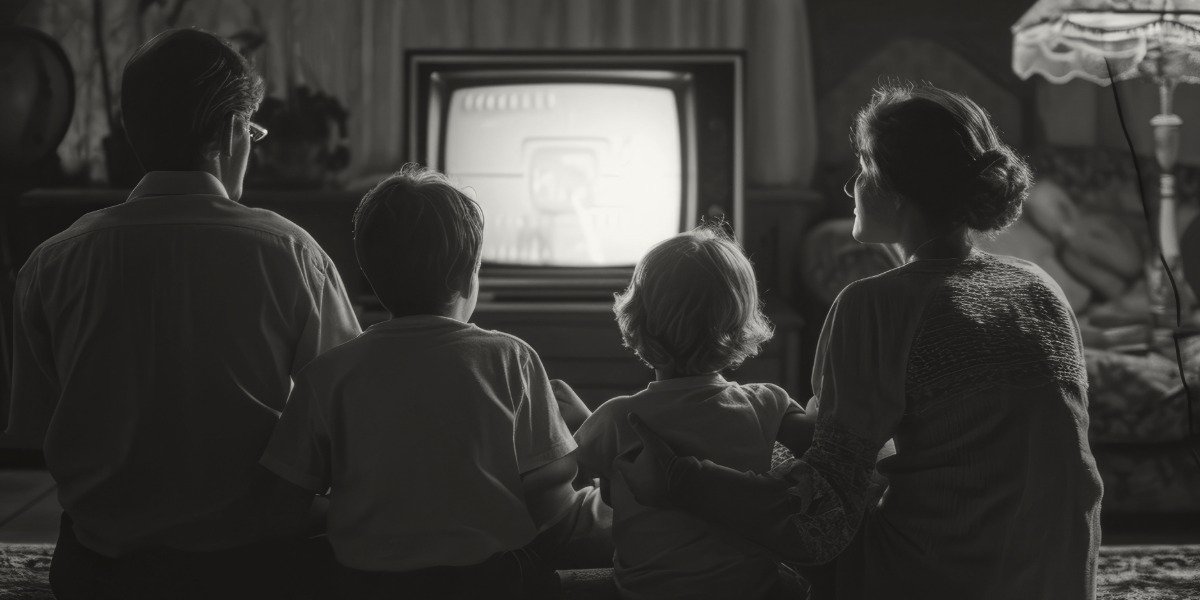
My nights were solitary, illuminated only by the glow of a television screen. I spent hour after hour watching football matches broadcast from time zones thousands of miles away. There was a comfort in that isolation. I did not have to be a student, a son with a future, or a young man with ambitions. I only had to exist in the quiet hum of the living room.
But I was not always alone in the dark. My father was a man who often fought his own battles with sleep. Somewhere around one or two in the morning, I would hear the familiar, soft shuffle of his footsteps down the hallway. He would walk into the room, stand for a moment watching the screen without really seeing what's playing on, and then he would ask for tea.
He never once asked me for a simple cup of tea, nor did he ever request his usual cardamom chai. My father loved cardamom tea. He drank elaichi chai frequently during the day, accepting it from anyone who brewed a pot. Whether from our kitchen or a roadside dhaba, he would drink chai anywhere. It is a ubiquitous comfort in our culture, fragrant and easily found. But in those quiet, midnight hours, he never once asked me for it. From me, he only ever asked for adrak wali chai, a sharp, boiling concoction of crushed ginger, milk, and tea leaves.
It was a private language shared exclusively between the two of us. He knew that the ginger tea was something I alone made for him, and I didn't know it then, but looking back now, I realize he had reserved this request entirely for me. It was a quiet ritual that required no grand declarations of love. We spoke our affection in the language of a boiling saucepan, the scraping of a spoon, and the sharp, earthy scent of ginger rising into the cold night air.
There was a very peculiar geometry to how I served this tea. I would bring out two mugs and fill them exactly three quarters of the way to the brim, leaving the top quarter entirely empty. For reasons I still cannot trace back to their origin, we called this an "adha cup", a half cup. The mathematics of it were completely wrong. Three quarters is not a half, yet that is what an adha cup means everywhere in our culture. It is a shared quirk of our language, a small cultural contradiction that nobody ever bothers to question or correct. We sat there in the dim light, two men holding our half-empty cups, waiting for the tea to cool just enough to drink.
With the mugs resting on the table between us, the second part of our ritual began. We would play Ustad Amanat Ali Khan’s rendition of Ibn-e-Insha’s famous ghazal, Insha Ji utho ab kooch karo.
We rarely listened to it just once. The song would end, the silence would stretch for a moment, and then we would play it again. We let the track loop two or three times, waiting for that first scalding sip to cool and then slowly drinking our tea while the song played on. Ustad Amanat Ali Khan’s voice possesses a haunting, soaring melancholy. It sweeps through the room, dragging the weight of the world behind it. Between the deep, arches of the music, my father and I would talk. He would express his quiet concern for my erratic routine. He worried about me sleeping through the day and living like a ghost in the night. It was a gentle nudge, a paternal anxiety wrapped in a soft voice, never an angry lecture. After a short conversation, he would finish his tea, stand up, and return to his bedroom. I would be left alone once more, returning my eyes to the TV until the sky outside turned a pale, bruised purple.
That ritual became so deeply ingrained in the fabric of our home that the ghazal eventually bled into my very identity. My father stopped using my given name when he needed to wake me up. When the afternoon sun was high and it was time for me to finally join the waking world, he would come to my doorway, look at me tangled in the blankets, and say softly, "Insha ji, utho."
Insha ji, wake up.
The transition from 2019 to where I stand today was not a sudden, it was a slow realignment of our lives. In 2020, I got into university, and my nocturnal world was finally forced into the daylight. My routine shifted, but our ritual adapted. We simply moved our tea earlier into the night, brewing our half cups before I had to sleep for morning lectures. By 2024, I had graduated and stepped into my first job.
Today, I am twenty four years old. I no longer live in that house. I live in a different city, navigating a life that looks nothing like the suspended reality of 2019. I have a job that demands my presence during the daylight hours. My routine is aggressively normal. I wake up early, I go to the office, I interact with colleagues, I navigate the noise of a bustling city, and when the evening comes, I return to my nest.
I unlock the door, I turn on the lights, and I order my dinner and eat in silence.
It is in this profound, recurring silence of my adult life that the true meaning of Ibn-e-Insha’s poetry has finally caught up with me. My father is no longer alive. He experienced his own final kooch, packing up his tent pegs and departing from this world entirely.
When I was seventeen, I thought the ghazal was simply a beautiful, tragic piece of music. I thought the word kooch referred to a grand, poetic exit from a lover's street. But when my father passed away, the song stopped being a metaphor. It became a sharp, unyielding reality. Looking back at those midnight hours, I now realize that by anchoring our quietest moments to a song about the absolute necessity of leaving, my father was preparing me for the empty room I sit in today. He was teaching me how to survive his absence.
His passing forced me to understand the mechanics of loss on a fundamental level. But living alone, far away from the kitchen where I used to boil ginger, has taught me that grief is not a monopoly held exclusively by the dead.
Because I have survived the absolute, world altering grief of losing my father, my eyes have been opened to the quieter, everyday griefs that surround us. We lose number of people simply to the sheer, unstoppable momentum of living. We mourn the living just as fiercely as we mourn the departed, sometimes more so, because the living are still out there, existing in a world that no longer includes us.
When you sit alone in a room at twenty four, you begin to realize how many quiet funerals you have already attended. Tragic love stories do not always end with a theatrical goodbye in the rain. Sometimes, they just fade. You meet someone, you share a profound and electric intimacy, you build an entire vocabulary of inside jokes and quiet understandings. You learn how they take their coffee, you memorize the exact cadence of their laugh, and you imagine a future constructed around their presence. And then, slowly, the circumstances shift. A new job in a different city. A misunderstanding that grows into a wall of silence. A gradual lengthening of the time between text messages.
There is no singular moment of destruction. They just drift out of the frame of your life. Eventually, the person who knew your deepest insecurities becomes a stranger who watches your life through social media updates and sometimes not even that. That is a very specific, suffocating kind of mourning. There is no public ritual for a love story that simply could not survive the logistics of adulthood. Society does not send you flowers when a friendship quietly dissolves.
You are just left in a quiet room, eating dinner alone, carrying the invisible, heavy weight of all the people who have passed through your life and moved on.
As I spend my evenings alone in my apartment, I often think about the philosophy of the self. Philosophers have argued for centuries about what actually makes us who we are. Are we the sum of our achievements? Are we the accumulation of the things we love? Sitting in my quiet room, looking at the blank walls, I have become convinced that we are defined almost entirely by our departures.
We are carved out by the absences we carry. The silence in my apartment is not empty. It is heavily populated by the ghosts of old routines, by the memory of midnight ginger tea, by the echoes of former lovers, and by friends who now live on the other side of a phone screen, forever busy, forever out of reach.
The tragedy of growing up is realizing that you are constantly being evicted from your own life. The seventeen year old boy who stayed up all night watching football and making tea for his father is gone. He experienced his own kooch. I have inherited his memories, his face, and his name, but I can never return to his room. That era is dead, and I am merely the survivor tasked with remembering it.
When Ibn-e-Insha wrote, "Insha ji utho ab kooch karo, is shehar mein ji ko lagana kya" (Get up, Insha Ji, let us depart, why set your heart upon this city?), he was writing about the absolute, terrifying impermanence of the human condition.
The "city" he refers to is not just a place made of bricks and roads. The city is a metaphor for a phase of life, a relationship, a childhood home, a period of safety. We build our homes in these cities. We decorate them with our habits. We assume we will live in them forever. But time is a cruel landlord. Eventually, the lease expires. The circumstances change, the people leave, the era ends, and we are forced to pull up our tent pegs and wander into the unknown once more.
Why set your heart upon this city? Because the city will eventually push you out.
Living alone has taught me that we are constantly in a state of leaving. Every time you lock the door to an old apartment for the last time, you are practicing for the final departure. Every time you delete a phone number of someone you used to love, you are experiencing a small death. Grief is simply the persistent realization that nothing was ever yours to keep.
We spend so much of our lives trying to anchor ourselves to things we hope will endure. We crave permanence. We want friendships that last a lifetime, romances that never lose their fire, and homes that never change. We measure the value of human connections by their completeness and their longevity. If a relationship ends, we call it a failure. If a friendship fades, we view it as a tragedy. If a life is cut short, we view it as an unfinished story.
But my father and I used to pour our tea exactly three quarters full and call it a half cup.
I think there is a profound, grounding truth hidden in that childhood contradiction. We called an incomplete cup a fraction of what it really was, embracing the empty space at the top of the mug. Intimacy, I have realized, is rarely about perfect, unshakeable permanence. It does not require a neat, cinematic ending to be valid.
Intimacy lives entirely in the unfinished space. It lives in the quarter of the cup left empty. It lives in the fragmented chapters of the people we loved who could not stay for the whole story. The friend you only knew for two years in college before you lost touch still changed the architecture of your mind. The romance that collapsed under the weight of distance still taught you how to love. My father’s life ended before I was ready to navigate the world alone, but his departure does not invalidate the years he stood by my side.
The word kooch speaks of leaving, but my own philosophical understanding of it has shifted entirely since I was a teenager. Departure is not the opposite of living. It is the exact condition that gives our time together its meaning. If we had infinite time, if nothing ever changed, our actions would hold no weight.
The midnight ginger tea mattered to my father and me not because we thought we would be drinking it together forever. It mattered precisely because the night was short, the tea was cooling, and one of us would eventually have to stand up and walk away. The beauty of the ritual was heavily dependent on its fragility. We were borrowing time from the night, knowing the morning would eventually come and wash it all away.
I am twenty four now, and I understand that I will spend the rest of my life walking out of rooms, leaving behind cities, and waving goodbye to people I thought I would know forever. The grief of adulthood is a constant hum in the background of a busy life.
But I also know that the empty space left behind by these departures is a testament to the fact that I lived there at all. The pain of missing someone is simply the tax we pay for having had the privilege to love them in the first place.
Sometimes, when the silence of my apartment feels too heavy, I want to walk into my small kitchen, take out the saucepan, crush a piece of ginger, and watch the tea boil. But I rarely do. Making that ginger tea at home feels like trespassing on a private ritual that no longer has its other half.
Instead, I put on my shoes and step out into the night, walking toward a nearby Quetta café. I sit on a plastic chair under the harsh fluorescent lights and order a cup. Drinking chai there carries its own heavy, double edged grief. It takes me back to my university years, to the endless late nights spent sitting at Quetta dhabas with friends, laughing and arguing over steaming cups, entirely convinced that our bond was permanent. Now, those friends have scattered into different careers and cities, quietly drifting out of my life, leaving me to sit alone among strangers.
Sitting at that roadside café, I am caught in a dual pain. The kitchen I left behind at home mourns the father who passed away, while the public café mourns the friends who simply moved on. It is a strange, philosophical collision of loss. One is a permanent death, and the other is a living departure, yet both leave you standing in the exact same cold silence.
I still sometimes when I go back to my home make adrak wali chai, just the way I did in 2019. But now, I pour it into a single mug. I fill it exactly three quarters of the way. I leave the top quarter entirely empty. That empty space belongs to my father. It is the physical manifestation of his absence, a quiet acknowledgment that the cup will never be full again.
I carry my adha cup to the table, sit down in the quiet room, and I play Ustad Amanat Ali Khan on my phone.
I sit and listen to the same melancholic arches, the same warnings about the vanity of the city, the same call to pack up and leave. But I do not just hear a song about a traveler preparing for the end.
I hear the inescapable, beautiful reality of time. I hear the footsteps of all the people who have walked out of my life, leaving their fingerprints on my soul. I feel the warmth of a love story that ended but still keeps me company in the dark.
And above all of it, cutting through the silence of a city where I live alone, I hear my father’s voice standing at the doorway of my youth. He is looking at me, teaching me long before I was ready, how to accept the end of the night, how to wake up, and how to move on.
Insha ji, utho.