The Room I Learned to Leave

There was a time when I thought leaving meant walking out of a door.
I was wrong.
Sometimes you leave a room and spend years trying to convince the rest of yourself that you are allowed to leave it too.
For a long time, my body understood this before my mind did.
I could sit in my own bedroom, surrounded by things that belonged to me, with the familiar noise of my family somewhere beyond the door, and still feel as though I had not really returned home.
Home had become a strange word.
It was supposed to mean safety. Instead, for a while, it reminded me of the place where I had learned to become quiet.
I became very good at quiet.
I learned how to measure my words before saying them. I learned that sometimes silence could prevent an argument, even if it could not prevent the fear that came afterward. I learned to listen for footsteps. I learned that a person's voice could change the temperature of an entire room.
I also learned how easily a person can disappear while still being alive.
There is no dramatic moment when it happens.
You do not wake up one morning and find that you have become a stranger to yourself.
It happens in smaller ways.
You stop saying what you think.
You stop laughing as loudly.
You start apologising before anyone asks you to.
You begin questioning your own memories.
Maybe I misunderstood.
Maybe I was too sensitive.
Maybe this is what marriage is.
Maybe everyone feels this way.
Maybe I should try harder.
The word maybe can become a very dangerous place to live.
When the marriage ended, people thought the hardest part was over.
They were wrong too.
Leaving something painful does not immediately make you feel free.
Sometimes freedom is frightening because you have spent so long being told what to do that you no longer remember what you want.
There were days when I would look at myself and feel almost embarrassed by how ordinary I looked.
Nothing about me announced what had happened.
I could attend class.
I could talk to people.
I could smile when someone made a joke.
I could answer questions.
I could write.
And then, at night, when everything became quiet, the memories would return with a clarity they never seemed to have during the day.
Night has a way of removing all the distractions we use to survive ourselves.
I remember lying awake and wondering why my mind kept returning to places I desperately wanted to forget.
I wanted healing to be an eraser.
Instead, it became a language.
I began writing because there were things I could not say aloud.
At first, I did not write about what had happened.
I wrote around it.
About loneliness.
About girls who were afraid.
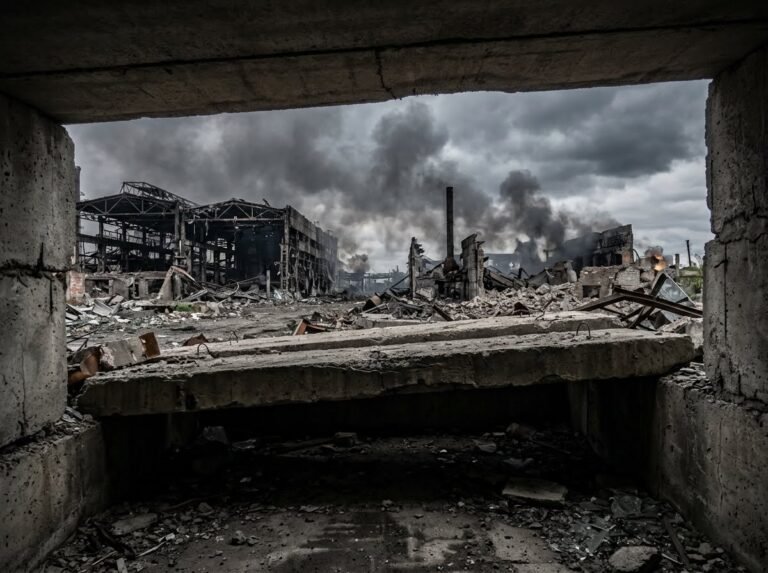
About rooms with closed windows.
About people who smiled because they did not know what else to do.
About hearts that kept beating long after they had stopped believing in tomorrow.
Eventually, I realised that every poem was taking me a little closer to the truth.
Writing did not save me in one dramatic moment.
It gave me somewhere to put the pieces.
And perhaps that is what healing really is.
Not becoming the person you were before.
Not pretending that nothing happened.
Not turning pain into a beautiful story just so other people can feel comfortable reading it.
Healing, for me, has been learning that something can hurt me deeply without owning me forever.
There are still days when the past arrives without knocking.
There are still nights when sleep feels like something I have to negotiate with.
There are still moments when I question whether I am truly as strong as people tell me I am.
But I have stopped measuring strength by the absence of fear.
I think strength can look like fear sitting beside you while you continue anyway.
It can look like sending an application.
Writing another page.
Earning your own money.
Going back to your studies.
Laughing without checking who is listening.
Buying something for yourself without feeling guilty.
Making plans for a future you once could not imagine.
It can even look like doing absolutely nothing on a difficult day and refusing to punish yourself for it.
I used to think survival was the opposite of living.
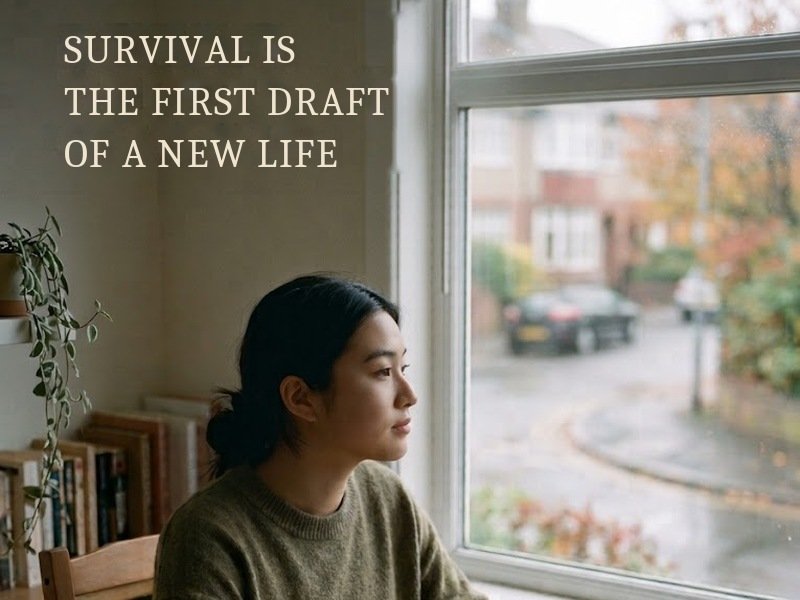
Now I understand that sometimes survival is the first draft of a new life.
My family became part of that draft.
They stood beside me when I was not particularly good at standing beside myself.
Their support did not erase what happened.
But it gave me something I had almost forgotten existed: evidence that I was still worth protecting.
That mattered.
It still matters.
Because trauma has a strange talent for making you believe that what happened to you says something about what you deserve.
It doesn't.
What happened to me is part of my history.
It is not my identity.
I am still learning the difference.
Maybe that is why I am drawn to quiet rooms now.
Not because I want to hide in them.
Because I want to know that I can leave.
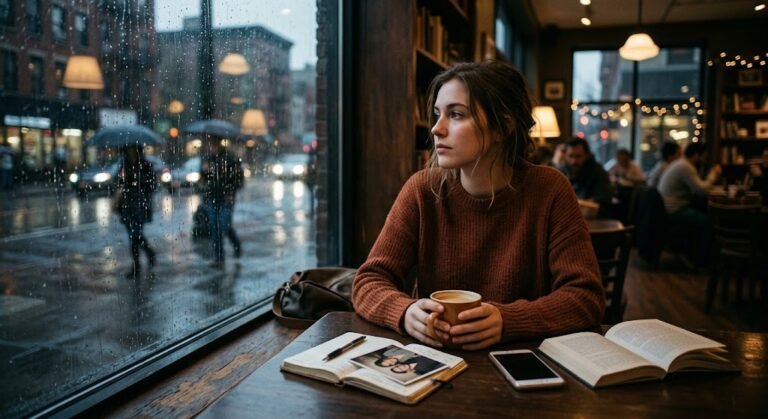
I want to sit somewhere alone and hear my own thoughts without being afraid of them.
I want silence to mean rest instead of danger.
I want a closed door to simply be a closed door.
And perhaps most of all, I want to become someone who does not need to disappear in order to feel safe.
There is a younger version of me I think about sometimes.
She believed that her life had already been decided for her.
I wish I could sit beside her.
I would not tell her that everything will be easy.
That would be a lie.
I would not tell her that she will forget.
She won't.
I would simply tell her:
You are still here.
One day, that will be enough to begin.
And one day after that, it will become more than enough.
You will write.
You will work.
You will make mistakes.
You will laugh again.
You will build a life whose shape nobody else gets to decide.
And when you finally look back at the room you once thought you could never leave, you may realise something unexpected.
The door was never the only thing that had to open.
You did too.
WRITTEN BY : Tuba Arif