
Reimagining Higher-Order Thinking in India: From Nobel Prize Aspirations to Start-up Culture

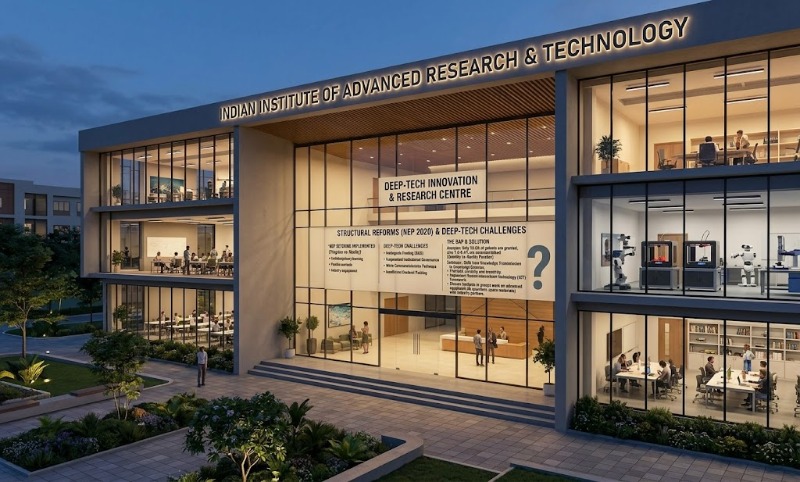
India’s higher education is shifting toward innovation and startups, doubling patent applications. However, low grant and commercialization rates reveal a "quantity over quality" paradox. To foster genuine breakthroughs, universities must prioritize creativity and adopt the Human-Interaction-Technology framework to stay relevant amid AI.How can Indian institutions successfully shift their focus from volume to value?
India has emerged as one of the world's largest higher education ecosystems, with a rapidly expanding network of universities, institutes of national importance, research centres, and private institutions offering master's and tertiary education across diverse disciplines [1-5]. The implementation of reforms under the National Education Policy (NEP) 2020 has accelerated efforts towards multidisciplinary learning, flexible curricula, academic mobility, digital integration, industry engagement, research exposure, and internationalization [6-10]. Despite significant progress in enrollment, infrastructure, and access, the quality of postgraduate education and research outcomes remains uneven across universities/institutions. A substantial proportion of master's programs continue to emphasize examination-oriented learning, content reproduction, and professional credentialing rather than inquiry-based learning, multidisciplinary collaboration, technical expertise, and original research. Consequently, learning outcomes often fall short of global benchmarks in critical thinking, advanced problem-solving, scientific creativity, versatile adaptability, and interdisciplinary research capabilities.
This article critically analyses the status of higher education in India with particular emphasis on learning outcomes in fundamental research and deep-technology innovations. It examines the alignment of postgraduate curricula, research ecosystems, faculty preparedness, laboratory infrastructure, industry-academic collaboration, and innovation policies with internationally recognized best practices. While India has demonstrated notable achievements in sectors such as information technology, space sciences, pharmaceuticals, digital public infrastructure, and startup entrepreneurship, the ecosystem for frontier research and deep technologies, including artificial intelligence, advanced materials, aerospace, biotechnology, electromobility, quantum computing, semiconductors, robotics, and clean energy, continues to face structural challenges. These include inadequate funding in research and development, fragmented institutional governance, limited interdisciplinary research culture, insufficient doctoral and postdoctoral training, and weak commercialization pathways. The success of the deep‑tech journey depends on stronger networks and collaborations, shared research infrastructure and parks, academia-industry partnerships, robust funding and support mechanisms, specialised incubators and technology‑transfer offices, effective IP commercialization, and the development of globally scalable frontier technologies.
The gap between ideals and reality is a tension we must continually confront and correct. Achieving excellence in deep-technology innovation requires a paradigm shift from knowledge transmission to knowledge creation. Learning outcomes at the postgraduate level must be redefined to prioritize research aptitude, analytical rigor, computational proficiency, design/analytical thinking, ethical reasoning, and entrepreneurial competencies. Drawing on global standards and best practices from leading research-intensive universities and innovation ecosystems, the paper advocates for strengthened research funding, outcome-based curricula, experiential learning, international collaborations, open science practices, and robust quality assurance frameworks. It further emphasizes the need for creating integrated ecosystems and significant opportunity windows that connect universities, industry, government, and society to nurture a culture of fundamental scientific inquiry and breakthrough innovation. The paper proceeds in the following order: future‑focused education, startups and entrepreneurships in India, patent culture in India, research publication quality, service‑based versus manufacturing industries, volume‑to‑value-driven prospects, and concluding comments.
Future-Focused Education: Higher-Order Thinking Skills
A creator's curiosity and the conviction that one can invent new ways of doing things drive human progress; this requires a continual journey of advanced scientific research and disruptive innovation. India’s complete absence of Nobel Prize in science the 94 years (C.V. Raman, Physics 1930), while working on Indian soil, exposes a deep crisis in higher-order thinking, fundamental research, and original scientific research capability [11-13]. The country allocates less than 0.7 % of GDP to R&D (China - 2.4 %, US - 3.5 %), with inadequate public funding for basic research, excessive bureaucracy, and decay of research capabilities in universities and higher education institutions, stifling scientific potential [14, 15]. Fewer than 1 % of Indian students pursue research, and a relentless brain drain of talented scientists migrating abroad for greener opportunities, strategic resources, and worldwide recognition leaves India deprived of minds capable of breakthrough inventions that benefit humanity. The higher education system prioritizes short-term, application-oriented goals over risky, long-term fundamental inquiry needed for Nobel-worthy innovations in chemistry, medicine, or physics. Excessive administration, lack of incentives for private research, lack of higher education performance audit, and weak mentorship in original thinking further erode the research ecosystem, transforming India into a consumption hub for global knowledge rather than an active creator of paradigm-shifting discoveries [16-19]. Without sustained investment in curiosity-driven basic research, institutional autonomy, and a research culture that rewards intellectual risk-taking, India will remain unable to produce Nobel laureates or generate original research output (patents, papers) that elevates global human progress.
India has over 1,330 universities, with the higher education ecosystem comprising a massive network of central (~ 54), state public (~ 490 +), private (~ 455), and deemed-to-be universities (~ 126). India hosts the world’s second-largest higher education ecosystem, with more than 58,000 institutions, and supports an enrollment of 43.3 million students, including institutes of national importance: 23 IITs, 21 IIMs, and 20 AIIMS. Yet advanced-degree attainment is low: only about 12 % of students pursue postgraduate studies, and just 0.5 % are enrolled in Ph.D. programs. India produces approximately 25,000 to 30,000 Ph.D. holders annually, making it the fourth-largest producer globally. However, as a share of the population, the country lags well behind leaders such as Switzerland (≈ 3 %) and the United States (≈ 1.8 %). (India: population ~144 crore, graduates ~ 8 %, postgraduates ~ 1 %, Ph.D. holders ~ 0.03 %). This translates to only 3 individuals per 10,000 in India holding a doctoral degree, representing an exceptionally small proportion (a drop in the ocean). Academic paper quality and research capacity have been persistent challenges for decades. No Indian university consistently appears among the global top 100, and the larger system shows wide disparities across its many affiliated/autonomous colleges. Constraints such as limited research infrastructure, low faculty-to-student ratios, and weak international collaborations continue to hinder India’s ability to meet global benchmarks, even as enrollment rises [20-23]. In addition to strengthening research infrastructure and enhancing faculty welfare schemes, stricter enforcement of academic rigor in higher education institutions is essential to overcome existing challenges, foster meaningful social impact, and promote responsible and sustainable growth in research. Sustainability thinking, interdisciplinary approaches, and an awareness of long-term environmental impacts must be embedded in both the curriculum and the culture of universities. Such an integrated approach will play a critical role in shaping future human resources who are equipped to address the complex challenges of a rapidly changing world. The rapid growth of startups and AI-driven enterprises is transforming the country into a major global technology and innovation hub, and Indian higher education institutions must adapt accordingly.
Startups and Entrepreneurship in India
India is the third-largest start-up ecosystem globally, and the start-up culture has energised the economy with innovation and ambition [24-27]. The country now has over 517 incubation centres, 111 unicorns, and around 200,000 startups. The real transformation must occur in how learning is experienced, applied, and continuously updated within our higher-education system. Yet its strengths are undermined by persistent systemic flaws, reflected in overall patent quality across three primary dimensions: legal strength, technical merit, and commercial potential. While a few success stories often highlight technological prowess and rapid market scaling, many start-ups pursue growth-at-all-costs, driven by abundant venture capital, rather than building sustainable unit economics. This lack of capacity building creates fragile businesses dependent on a continual funding pattern and exit-driven incentives, often neglecting good governance, employee welfare, product quality, and long-term product-market fit. Further, the ecosystem’s glamorization of unicorn status sidelines deep-tech, frugal, and socially useful ventures that struggle to attract attention and capital. Regulatory hurdles, inconsistent access to experienced management, and a talent market skewed toward a few major cities further complicate opportunity and risk factors. India’s start-up culture must rebalance bold risk-taking with disciplined financial practices, stronger corporate governance, and broader support for diverse, mission-driven enterprises to reach the global benchmark. These are the critical areas in which a robust innovation pipeline must be actively developed to transform breakthrough ideas emerging from university laboratories into globally scalable market solutions. India urgently needs campus-based incubation centers and technology parks to help emerging startups scale into established companies, especially as the nation faces a critical gap in its patent culture. Initiatives like Startup India (SI), the Atal Innovation Mission (AIM), and NEP 2020 can steer the way by fostering adaptable problem-solvers who blend technical expertise with creativity.
Indian conglomerates Tata, Reliance, Adani, and Godrej are poised to drive India's technological transformation through massive, coordinated investments across critical sectors such as semiconductors (chip manufacturing), artificial intelligence (AI infrastructure), batteries (energy storage systems), and renewable energy (green energy). Collectively, the investments amount to over $ 210 billion and are poised to catalyse an estimated $ 250 billion AI infrastructure ecosystem in India over the next decade, positioning the country as a global hub for AI development and deployment. The private corporate sector's direct contribution to India's Gross Value Added (GVA) and GDP typically ranges from 12 to 15 %. The profit-to-GDP ratio of major Indian companies reached an all-time high of roughly 5.2 %, up from the 3-4 % range earlier in the decade. Indian firms are well-positioned to accelerate investment, employment creation, and fiscal revenues, substantially bolstering the nation's economic growth and resilience. By scaling operations with indigenous technologies (conceived, developed, and owned in India), Indian companies can unlock higher productivity, reduce import dependence, capture greater value across domestic supply chains, and drive inclusive, export-competitive growth that strengthens the nation’s economic sovereignty. A multidisciplinary approach, urgent action, and a readiness to transcend traditional educational boundaries are essential to lead the global technology race, especially given that some 1,800 Global Capability Centers (GCCs) already operate in the country. Shifting from a culture of consumption to one of creation is essential for sustained economic growth and intellectual sovereignty.
An ESG framework is a structured set of guidelines and standards that organizations use to evaluate, manage, and disclose their performance across three core areas: environmental (impact on the natural world, carbon footprint, greenhouse gas emissions, energy efficiency, waste management, and sustainable supply chains), social (human capital and societal impact, labor practices, workplace diversity, employee safety, community engagement, and data privacy), and governance (internal controls and corporate ethics, board diversity/bioethics, executive pay, anti-corruption policies, shareholder rights, and whistle-blower programs). Research and innovation in evolving engineering systems, distributed energy systems, renewable energy integration, smart grid development, data-driven decision-making, and other emerging areas must be vigorously pursued. Further, fundamental research on novel products, processes, and systems should be encouraged to foster out-of-the-box solutions that address complex societal and technological challenges. The Indian Union Budget 2025–26 has allocated ₹ 500 crore to establish a centre of excellence in AI for education, with the objective of transforming the higher education system and enhancing skill development. While AI-powered educational tools offer unprecedented access to knowledge and personalized learning support, their widespread use may inadvertently reduce the cognitive effort and productive struggle essential to deep learning. The ease with which AI tutors provide solutions can diminish students’ patience and perseverance when engaging with complex problems ranging from public health crises to climate change. Yet, tenacity remains fundamental to the development of genuine competence and expertise. Excessive reliance on AI and offloading cognitive tasks to external tools may therefore lead to unintended consequences. It is through grappling with challenging problems, not merely arriving at solutions quickly, that students cultivate structured thinking, strengthen problem-solving abilities, and develop the judgment required to navigate complex situations and make informed, thoughtful decisions.
Patent Culture in India: A Wake-Up Call
Over the last decade, India witnessed a dramatic surge in patent filings, rising nearly 93 % from 42,951 to 82,811 (2014 to 23), with a record 13.6 % year-on-year growth in 2022, the highest in a decade. By 2024-25, filings almost doubled again to 110,375, reflecting an expanding research ecosystem and ‘policy push’ under the National IP Strategy (NIPS)[28-30]. However, the rate of patent commercialization remains significantly low despite a recent surge in patent grants. The quantitative growth hasn't translated into meaningful commercialization or technology transfer: only 1.59 % of India's 230,480 patents in force have been commercially worked, rising to merely 6.39 %. Studies show that only 1.5-14 % of patents granted in India over the past 8 years have been commercialized, with fewer than 5 % successfully brought to market. The root causes include weak technology transfer offices (TTOs), fragmented IP ecosystems between academia and industry, inadequate funding for prototyping and scaling, and a lack of mentorship in translating IP into marketable products. This commercialization failure means patents generate minimal revenue through licensing or royalties, failing to stimulate economic growth, create employment, or enhance the nation's global competitiveness in deep-tech domains. Despite rising AI, blockchain, IoT, and patent filings, India remains a patent-filing hub rather than an innovation-commercialization powerhouse, with policy success measured by numbers rather than tangible economic impact. The rapid pace of technological change requires universities to continuously refine their curricula so that students are prepared for emerging industry needs and move from the periphery to the core of patent commercialization.
Research Publication Quality: The Path to Excellence
Indian research paper publications have surged in volume (60,555 to 149,213), but this ‘publications boom’ has exposed a severe quality crisis, with India ranking 28th out of 30 countries in publication quality indicators and a category normalised citation index (CNCI) value of only 0.879 (China -1.12, US-1.25) [31-33]. Only 1.8 % of Indian papers rank in the top 1% of globally cited publications, compared to 3.8 % for the US, and merely 15.8 % appear in the top 10 journals (UK - 37.3 %). The H-index for Indian publications (925) is 71 % lower than that of the US (3,213). Indian journals display a significant quality gap. Only 12 Indian journals are ranked in the Quartile system, with the majority confined to Q3 or Q4 categories, indicating inadequate editorial standards and weak peer-review processes. Individual journals show modest metrics; for instance, the Indian Journal of Medical Research has an impact factor of 2.5 and an h-index of 110, while the Indian Journal of Ophthalmology has an impact factor of 2.10 and an h-index of 79. However, most Indian journals have impact factors well below 1, and the i-10 index remains low for the majority, reflecting limited global citation impact. This disparity stems from inconsistent editorial rigor, weak peer review, and the proliferation of predatory journals that publish for article processing charges (APCs) without proper review, undermining long-term scientific quality.
Indian research paper quality deficit correlates with systemic plagiarism: India has recorded 303 plagiarism-based retractions since 2020, accounting for 11 % of global cases, with six of the top ten most-retracted global universities being Indian. Credibility assessments reveal 238 of 350 Indian universities face medium-to-significant credibility risk, driven by paper mills, AI-written papers, retracted papers, and incentives that prioritize publication counts (quantity) over academic rigor (quality). Consequently, Indian universities remain marginal in global rankings: in QS World Rankings 2027, only IIT Delhi (118) and IIT Bombay (134) break the top 150, with no Indian institution among the world's top 100 research universities. Despite higher citations-per-faculty scores than in Germany, the ecosystem's fixation on quantity over impact, predatory journal submissions, and inadequate research integrity mechanisms undermine India's global academic reputation and its capacity to generate technical knowledge for the greater benefit of humanity. Integrating AI innovation into the science curriculum is essential for preparing learners for the technical and global demands of an increasingly digital world. While AI offers powerful support for teaching and learning, its use must be accompanied by strong safeguards to prevent reliance on unverified information and to ensure responsible application in contemporary scientific and technological contexts.
Service-based Versus Manufacturing Industries
Over the last decade, Indian service-based companies (IT) have achieved monumental scale, becoming the ‘back office of the world’ with revenues exceeding $ 245 billion and employing 5 million professionals [34-36]. Companies such as TCS, Infosys, and Wipro dominated global outsourcing through cost arbitrage, leveraging India’s skilled engineering talent to serve Fortune 500 clients across banking, healthcare, and telecom sectors. This success masked deep structural vulnerabilities because growth rates dropped from ~ 20 % annually a decade ago to just ~ 6 % by the financial year 2025. The industry’s fatal flaw was its reliance on human-cost arbitrage rather than breakthrough innovation. This approach deprioritized R&D, undermined the creation of proprietary intellectual property, and transformed the sector from a high-margin business into a commoditized industry. As AI and automation reshaped value creation, the very strengths that fueled Indian IT’s rise (outsourcing, scale, and cost efficiency) turned into weaknesses. Clients now set up global capability centers (GCCs) in India, attrition and low morale plague the workforce, and the sector faces intense competition from its own foreign clients. The systemic failure to future-proof business models, poor capital allocation toward passive investments, and an archaic, cost-centric mindset transformed India’s ‘golden goose’ into a slow-moving elephant struggling for sustenance rather than a global leadership role.
Over the last decade, Indian manufacturing-based companies delivered modest successes, such as production-linked incentive (PLI) scheme surges in electronics and automotive sectors and rising global export shares, but failed to achieve transformative ambitions, with manufacturing still stagnant at 17 % of GDP instead of the targeted 25 % [37-40]. The core failure stems from India’s weak manufacturing culture, a risk-averse mindset, limited availability of risk capital, and a system that penalizes failure, all of which constrain deep-tech and breakthrough innovation in various sectors. India lacks a frontline/disruptive innovation, skilled operator talent is patchy, mid-sized companies struggle to access technology and credit, and big industrial clusters remain too few. The sector relies on incremental innovation, dependent on imported critical components and technology, with deeper science-intensive ventures such as semiconductors, defense drones, and synthetic biology still nascent despite a recent surge in deep-tech startups. Policy inconsistency, land-acquisition delays, high electricity tariffs, and inverted duty structures further strangle margins and scale. Ultimately, India’s manufacturing story is one of incremental growth without breakthrough innovation, where companies excel at execution and cost efficiency but falter in creating proprietary IP, pioneering disruptive technologies, or building a resilient, innovation-led manufacturing ecosystem. India's shift toward an export-predominant technology sector reflects its growing innovation capacity, competitive services and diverse product offerings, and expanding global market integration, which together reduce reliance on imports. A nation's economic stability depends on its ability to build IP-generating industries, not merely service-based ones.
Assessing the overall quality of a research paper requires a comprehensive evaluation of several key dimensions. These include methodological rigor, encompassing the appropriateness of the research design, the quality of data, sampling methods, and the reproducibility of the study; validity and reliability, including internal and external validity, the consistency of findings, and the objectivity of the research; originality and significance, which assess the novelty of the work and its potential scientific or practical impact; and reporting quality, reflected in the clarity of presentation, logical organization, comprehensive literature review, and accurate citation of relevant sources. Further, it is essential that the manuscript undergo an independent peer-review process prior to publication to ensure its scientific quality, credibility, and integrity. Improving the quality of Indian research papers begins with a robust research design, well-defined research questions, and a comprehensive literature review. This ensures that studies address genuine knowledge gaps rather than merely repeating existing work or conducting incremental extensions (derivative work). Universities should also train researchers in research ethics, data analysis, and academic writing, while enforcing checks against plagiarism, fabrication, and weak documentation. Finally, better funding, modern infrastructure, and collaboration with national and international experts can raise rigor, originality, and impact.
Volume-to-Value-Driven Prospects
Reimagining higher-order thinking in India demands aligning Nobel Prize aspirations with a new start-up culture and surge in patent filings by transforming the ecosystem from quantity-driven to quality-focused innovation: the 2024 milestone of 100,000 + patents granted and 69 % domestic filings signals momentum, yet patent quality remains the critical gap where corporates must lead to convert filings into genuine innovation leading to commercialization [37-40]. To resolve India's research crisis (0.6 % GDP R&D expenditure with the private sector accounting for only 36 % versus 70 % globally, the newly launched ₹1 lakh crore research, development, and innovation (RDI) Fund and Anusandhan National Research Foundation (ANRF) must prioritize outcome-based evaluation, institutional autonomy, and time-bound product/process delivery over process-driven oversight. The paper crisis (2,737 retractions in 2023 from ‘publish or perish’ pressures and paper mills) requires ranking agencies (QS, NIRF) to penalize retractions, UGC to revise promotion criteria, and journals to strengthen peer review with automated plagiarism detection and rejection of papers at an early stage of the review process. For deep-tech innovation, only 25 % of publicly funded R&D labs support startups, and 17 % aid deep-tech ventures, necessitating policy reforms under the National Deep Tech Startup Policy (NDTSP) 2023 to align lab mandates with developed India (Viksit Bharat) goals, strengthen industry partnerships, and expand access to facilities. Manufacturing crisis solutions include operationalizing the ₹ 76,000 crore India Semiconductor Mission (SM), National Quantum Mission (NQM) (₹ 6,003 crore), technology-led innovation programs, such as National Initiative for Developing and Harnessing Innovations (NIDHI-DST), Biotechnology Industry Research Assistance Council (BIRAC-DBT), and Innovations for Defence Excellence (IDEX-DIO), and technology transfer offices to bridge innovation-to-manufacturing gaps, reducing import dependence while enabling high-tech manufacturing hubs. Higher-order thinking flourishes when educators shift from rote learning to critical inquiry, mentor early-career researchers in ethical practices, and embed critical thinking, creativity, and problem-solving into curricula, transforming India from a knowledge consumer to a global innovation leader capable of producing Nobel-winning breakthroughs and sustainable deep-tech enterprises, thereby bringing academic and economic benefits. We must encourage modern learners to move beyond textbooks and contribute to the global body of knowledge. They should leave the comfort zone for the effort zone, shift from consumers to original creators, translate lab research into commercial solutions, move from demonstration to deployment, evolve prototypes into reliable products, and transition from safe routines to becoming a civilisation of architects. In addition to domain-specific functional expertise (technical specialization) acquired through structured frameworks and case-based analysis, capability-building and the creation of long-term value for students require critical and creative thinking, experiential learning, collaboration and communication skills, the ability to interpret insights and make strategic/algorithmic decisions, the design of novel solutions, a willingness to take risks, and active adaptation to changing circumstances.
We must engage learners early to spark curiosity and extend learning beyond the classroom through inspiring initiatives that produce meaningful, sustainable outcomes. A clear understanding of each student’s interests, academic goals, and long‑term career aspirations is essential. It is essential to cultivate strong research exposure by encouraging reflection, careful planning, and iterative improvement for students to make better-informed choices and enter higher study or careers well prepared. Students should evaluate scholarship options, a range of course pathways, and the quality of teaching before selecting a particular institution for their study. Also, it is important to encourage interdisciplinary learning, up-to-date domain skills, and real-world problem-solving, alongside community service and hands-on experiences. Deep learning gained through observation, practical projects, and exposure to the broader education ecosystem will strengthen readiness for complex future challenges. We should equip motivated students with the skills increasingly demanded across healthcare, manufacturing, logistics, and other sectors, and prepare them for a technology-driven future. Integrating AI, data science, machine learning, and business analytics into higher education programs will ensure graduates are job-ready and able to contribute to evolving industry needs. The HIT framework highlights the dynamic relationship among humans, interactions, processes, and technology to create meaningful, inclusive, and sustainable outcomes in education and research. In the Indian context, the HIT framework remains highly relevant in an AI-driven ecosystem by supporting initiatives such as the NEP 2020 and promoting responsible, human-centered adoption of AI to enhance teaching, learning, research, and innovation.
Concluding Comments
Basic sciences and specialized technical education must rapidly align with modern technological and industrial trends, AI, machine learning, robotics, advanced materials, data analytics, automation, digital transformation, and entrepreneurship, while recognizing sustained demand from manufacturing, energy, infrastructure, materials, mining, and transportation sectors for skilled engineers who drive economic development. Strategic leadership is essential to showcase national competitiveness and capabilities in areas such as affordable healthcare, AI-enabled diagnostics, advanced manufacturing, bioinformatics, cybersecurity, defence technologies, semiconductors, and sustainable energy. Higher education reform should blend industry-relevant curricula, multidisciplinary project-based learning, and robust partnerships with companies to ensure graduates are job-ready and innovation-oriented. Institutions should expand total faculty strength as part of an intentional growth strategy, creating the bandwidth for faculty to pursue high-quality, translational research and to design meaningful, mentored learning experiences that emphasize hands-on labs, internships, and data-driven systems thinking/sustainability practices. Investment in updated facilities, continuous faculty development, and flexible credit models will help embed cutting-edge tools and materials into teaching and research, producing engineers equipped to accelerate industrial growth and societal resilience.
To address the persistent challenge of brain drain, it is essential to actively incentivize the return and retention of domain-specific experts by fostering a research ecosystem that supports both fundamental and applied inquiry in diverse subject areas. Encouraging these experts to pursue meaningful research and develop deployable solutions with tangible societal and economic impact requires robust institutional support, streamlined administrative processes, competitive compensation, and opportunities for interdisciplinary local/global partnerships. Creating a work environment that values innovation, provides access to cutting-edge facilities, and recognizes contributions through transparent career advancement pathways is critical to reversing brain drain and empowering returning professionals to drive real-world change. The credibility and quality certification for Indian products must be enhanced to ensure international acceptance. India should launch a National Science Workforce Mission (NSWM) to build a steady pipeline of discipline-specific science and technology professionals at multiple levels: technicians, analysts, instrument operators, teachers, and researchers capable of producing world‑class outcomes. The mission would unite government, universities, industry, research centres, national laboratories, and technology firms to coordinate training, certification, and deployment. A standards‑based, competency‑focused approach will ensure portability of advanced skills, clear career pathways, and rapid absorption into basic research, higher education, and leading industry roles.
India’s startup ecosystem is rapidly expanding, supported by robust digital infrastructure, pro-entrepreneurship policies, growing applied research capacity, and deeper global integration through international collaborations. Indian startups are now targeting global markets by leveraging AI, digital payments, and cloud technologies while operating under increasing scrutiny from investors, customers, and financial institutions. AI is also being used to evaluate businesses, making clean, accurate, and verifiable data more critical than ever. This shift presents Indian startups with a unique opportunity to gain a competitive edge by building transparent, trustworthy, and globally credible ventures. India can become the next major global manufacturing hub by establishing integrated manufacturing clusters nationwide and upgrading micro and small enterprises through innovation-driven growth, knowledge creation, intellectual property, scalability, and technology adoption. Strengthening regional industrial collaboration and actively tapping global markets will amplify competitiveness. To support this transition, the government and industry should raise awareness, maintain competitive tax rates, streamline regulations, and remove bureaucratic barriers. These measures will attract investment, create jobs, and expand economic activity, defining future competitiveness.
India possesses immense demographic and intellectual potential to become a global leader in fundamental research and deep-technology innovation. However, realizing this vision will depend on sustained policy commitment/credibility, institutional autonomy, strategic investments, and transformative pedagogical reforms that place research excellence and innovation-driven learning outcomes at the centre of higher education. Such a transition is vital not only for strengthening global competitiveness but also for meeting national priorities and advancing knowledge and sustainable development. It is increasingly important for doctoral students in applied fields to work with industry partners to understand real-world applications of problem-solving and to remain the academic backbone of the nation. Learners graduating from the higher education system must be able to work across disciplines in technology-driven environments, demonstrate proficiency in modern tools/techniques, and engage effectively in collaborative innovation through strong global partnerships with industry. Such capabilities are essential for building a future-ready workforce across India. However, while emerging technologies matter, a solid grounding in the physical sciences and mathematics remains essential for graduates to adapt to technological shifts, collaborate across sectors, and drive disruptive innovation. Future-focused education that cultivates higher-order thinking, develops specific skills that the world needs, fosters a vibrant startup and entrepreneurship ecosystem, strengthens patent culture, and improves research publication quality is an essential complement to balancing India’s service-led strengths with expanded manufacturing capacity; together, shifting from volume-driven to value-driven approaches can boost competitiveness, innovation, and inclusive economic growth. India must build competitive ecosystems that attract mobile capital and talent in an increasingly globalized world. Drawing on historical lessons as a shared philosophy, today’s intellectual engagement can provide powerful, collective inspiration for a developing society.
References
1. Iyer, A., Koudal, P., Saranga, H., & Seshadri, S. (2009). Indian manufacturing: strategic and operational decisions and business performance. In the Indian economic superpower: Fiction or future? 79-100.
2. Agarwal, P., & Kamalakar, G. (2013). Indian higher education: Envisioning the future. The Indian Economic Journal, 61(1), 151-155.
3. Sharma, S., & Sharma, P. (2015). Indian higher education system: Challenges and suggestions. Electronic Journal for Inclusive Education, 3(4), 6.
4. Gupta, D., & Gupta, N. (2012). Higher education in India: structure, statistics and challenges. Journal of Education and Practice, 3(2).
5. Altbach, P. G., & Mathews, E. (2020). Is Indian higher education finally waking up? Change: The Magazine of Higher Learning, 52(3), 54-60.
6. Saravanakumar, A. R., & Padmini Devi, K. R. (2020). Indian higher education: issues and opportunities. Journal of Critical Reviews, 7(2), 542-545.
7. Sharma, N. K. (2023). A study of NEP-2020 in higher education. TechnoLearn: an International Journal of Educational Technology, 13(2), 75-80.
8. Wankhade, R. S. (2021). Higher education and NEP-2020. International Journal of Research in Social Science and Information Studies, 8(1), 51-56.
9. Venkateshwarlu, B. (2021). A critical study of NEP 2020: issues, approaches, challenges, opportunities, and criticism. International Journal of Multidisciplinary Educational Research, 10(2), 5.
10. Kumar, A. (2021). New Education Policy (NEP) 2020: A roadmap for India 2.0. University of South Florida, M3 Publishing, 3(2021), 36.
11. Jain, S., Khare, A., Goel, O., & Goel, P. (2023). The impact of NEP 2020 on higher education in India: A comparative study of select educational institutions before and after the implementation of the policy. International Journal of Creative Research Thoughts, 11(5), h349-360.
12. Feldman, B. (2000). The Nobel Prize: A history of genius, controversy, and prestige. Arcade Publishing.
13. Bhattacharya, S. (2011). Indian science today: an indigenously crafted crisis. Social Research: An International Quarterly, 78(1), 255-280.
14. Visvanathan, S. (2016). The pluriverse of failure in Indian science. Social Research: An International Quarterly, 83(3), 723-747.
15. Shukla, S. (2017). Innovation and economic growth: A case of India. Humanities & Social Sciences Reviews, 5(2), 64-70.
16. Zainab, T., Wani, Z. A., & Bhat, M. A. (2018). Scientific research in relation to Gross Domestic Product (GDP), a comparative study of China and India. In 2018, the 5th International Symposium on Emerging Trends and Technologies in Libraries and Information Services, IEEE, 328-330.
17. Singh, J. D. (2011). Higher education in India: Issues, challenges, and suggestions. Higher Education, 1, 93-103.
18. Sharma, S., & Sharma, P. (2015). Indian higher education system: Challenges and suggestions. Electronic Journal for Inclusive Education, 3(4), 6.
19. Carnoy, M., & Dossani, R. (2013). Goals and governance of higher education in India. Higher Education, 65(5), 595-612.
20. Sheikh, Y. A. (2017). Higher education in India: Challenges and opportunities. Journal of Education and Practice, 8(1), 39-42.
21. Kumar, C. R. (Ed.). (2018). The future of Indian universities: Comparative and international perspectives. Oxford University Press.
22. Mondal, D., & Kar, D. C. (2021). Ranking of universities: A study of the last four years of the top 25 Indian universities. Indian Journal of Information Sources and Services, 11(2), 31-44.
23. Fernandes, J. O., & Singh, B. (2022). Accreditation and ranking of higher education institutions (HEIs): review, observations, and recommendations for the Indian higher education system. The TQM Journal, 34(5), 1013-1038.
24. Patel, P. J. (2016). Research culture in Indian universities. Social Change, 46(2), 238-259.
25. Korreck, S. (2019). The Indian startup ecosystem: Drivers, challenges, and pillars of support. ORF Occasional Paper, 210, 193-211.
26. Adhana, D. (2016). Start-up India, Stand-up India: India turning into a Start-up Hub by fostering an entrepreneurial culture. International Journal of Management and Social Science, 4.
27. Nagar, S., & Ahmad, S. A. (2024). The Startup India Scheme: fostering entrepreneurship and innovation in the Indian ecosystem. Journal of Informatics Education and Research, 4(2), 2185.
28. Chandiok, S., & BCIPS, D. (2016). India, the world’s fastest-growing startup ecosystem: A Study. Amity Research Journal of Tourism, Aviation and Hospitality, 1(02), 1457-1466.
29. Singh, S., & Sapre, A. A. (2025). Elevating India's patent system: Strategic approaches to boost innovation and global competitiveness. The Journal of World Intellectual Property, 28(3), 869-884.
30. Kiran, R. (2017). IPR scenario and factors for promoting IPR culture: a post-TRIPS period analysis of selected pharmaceutical firms in North India. Economic Research-Ekonomska istraživanja, 30(1), 873-891.
31. Sodhi, G., Jain, A., & Singh, R. (2019). Technology start-ups and IP protection in India. CUTS Institute for Regulation and Competition, New Delhi, India.
32. Madhan, M., Gunasekaran, S., & Arunachalam, S. (2018). Evaluation of research in India–Are we doing it right? Indian J. Med. Ethics, 3(3), 221-229.
33. Seethapathy, G. S., Kumar, J. S., & Hareesha, A. S. (2016). India's scientific publication in predatory journals: need for regulating the quality of Indian science and education, Current Science, 1759-1764.
34. Kostoff, R. N., Johnson, D., Bowles, C. A., Bhattacharya, S., Icenhour, A. S., Nikodym, K., & Dodbele, S. (2007). Assessment of India's research literature. Technological Forecasting and Social Change, 74(9), 1574-1608.
35. Dossani, R., & Kenney, M. (2009). Service provision for the global economy: The evolving Indian experience. Review of Policy Research, 26(1‐2), 77-104.
36. Agrawal, S. (2022). Trends in performance management systems: a study of Indian service provider companies. Global Business Review, 23(2), 479-492.
37. Alejandro, L., Forden, E., Gosney, A., Herfindahl, E., Luther, D., Oh, E., & Wohl, I. (2010). An Overview and Examination of the Indian Services Sector, US International Trade Commission, Office of Industries.
38. Dangayach, G. S., & S. G. Deshmukh. Evidence of manufacturing strategies in the Indian industry: a survey. International Journal of Production Economics 83.3 (2003): 279-298.
39. Dangayach, G. S., & Deshmukh, S. G. (2001). Manufacturing strategy: experiences from Indian manufacturing companies. Production Planning & Control, 12(8), 775-786.
40. Pulicherla, K. K., Adapa, V., Ghosh, M., & Ingle, P. (2022). Current efforts on sustainable green growth in the manufacturing sector to complement “make in India” for making “Self-Reliant India”. Environmental Research, 206, 112263.