The Power of Many!
“I went down yesterday to the Piraeus with Glaucon the son of Ariston, that I might offer up my prayers to the goddess (Bendis, the Thracian Artemis.); and also, because I wanted to see in what manner they would celebrate the festival, which was a new thing. I was delighted with the procession of the inhabitants; but that of the Thracians was equally, if not more, beautiful. When we had finished our prayers and viewed the spectacle, we turned in the direction of the city; and at that instant Polemarchus the son of Cephalus chanced to catch sight of us from a distance as we were starting on our way home, and told his servant to run and bid us wait for him. The servant took hold of me by the cloak behind, and said: Polemarchus desires you to wait.
I turned round, and asked him where his master was.
There he is, said the youth, coming after you, if you will only wait.
Certainly, we will, said Glaucon; and in a few minutes Polemarchus appeared, and with him Adeimantus, Glaucon’s brother, Niceratus the son of Nicias, and several others who had been at the procession.
Polemarchus said to me: I perceive, Socrates, that you and your companion are already on your way to the city.
You are not far wrong, I said.
But do you see, he rejoined, how many we are?
Of course,
And are you stronger than all these? for if not, you will have to remain where you are.
May there not be the alternative, I said, that we may persuade you to let us go?
But can you persuade us, if we refuse to listen to you? he said.
Certainly not, replied Glaucon.
Then we are not going to listen; of that you may be assured.”
The Republic, Book 1, Trans. Allan Bloom
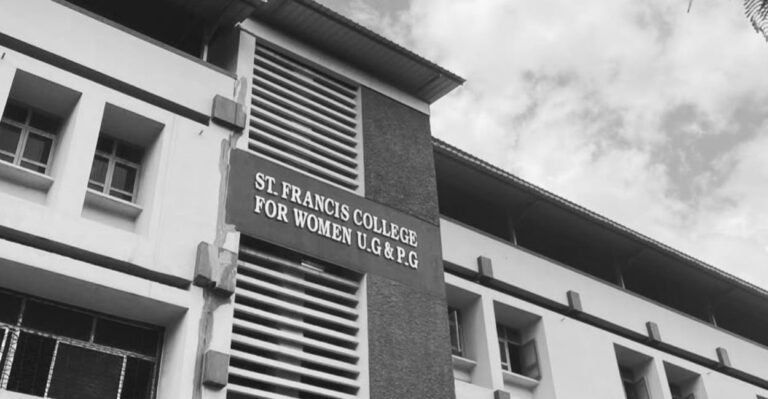
The year was 2009 and I was elected as the Head Girl of Pakistan’s largest liberal arts college; Kinnaird College for Women Lahore. The college offers education from pre-undergraduate to graduate levels. It is a legacy of the Empire; a British family established this institution in 1913. Christian missionaries of all denominations from across the world teach there along with local teachers. Mainly known for its arts and humanities, Kinnaird College offered a holistic education to women, focusing on all aspects, such as sports, drama and science. Situated on the famous Jail Road in Lahore, the College has produced some of South Asia’s most prominent female figures. Due its focus on western education, it often attracted women from more liberal and affluent backgrounds.
Especially, after the partition when a lot of Hindu and Parsi families moved to India, Kinnaird became a liberal haven for women in a Muslim majority country. A swimming pool, a large tennis court, cricket and hockey fields, theatre facilities, there were limitless possibilities for women to achieve whatever they want.
All of this available for an education which is almost free, but the admission process highly competitive. Within the four walls of the College, women can express themselves in an unlimited manner. It is not uncommon to meet a Pakistani woman, who feels honored to have been short-listed for the College’s admission despite not being admitted. (I can proudly say that us four sisters, all of us, went to Kinnaird, it was my mother’s dream and we all fulfilled it).
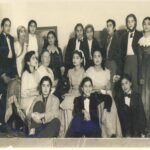
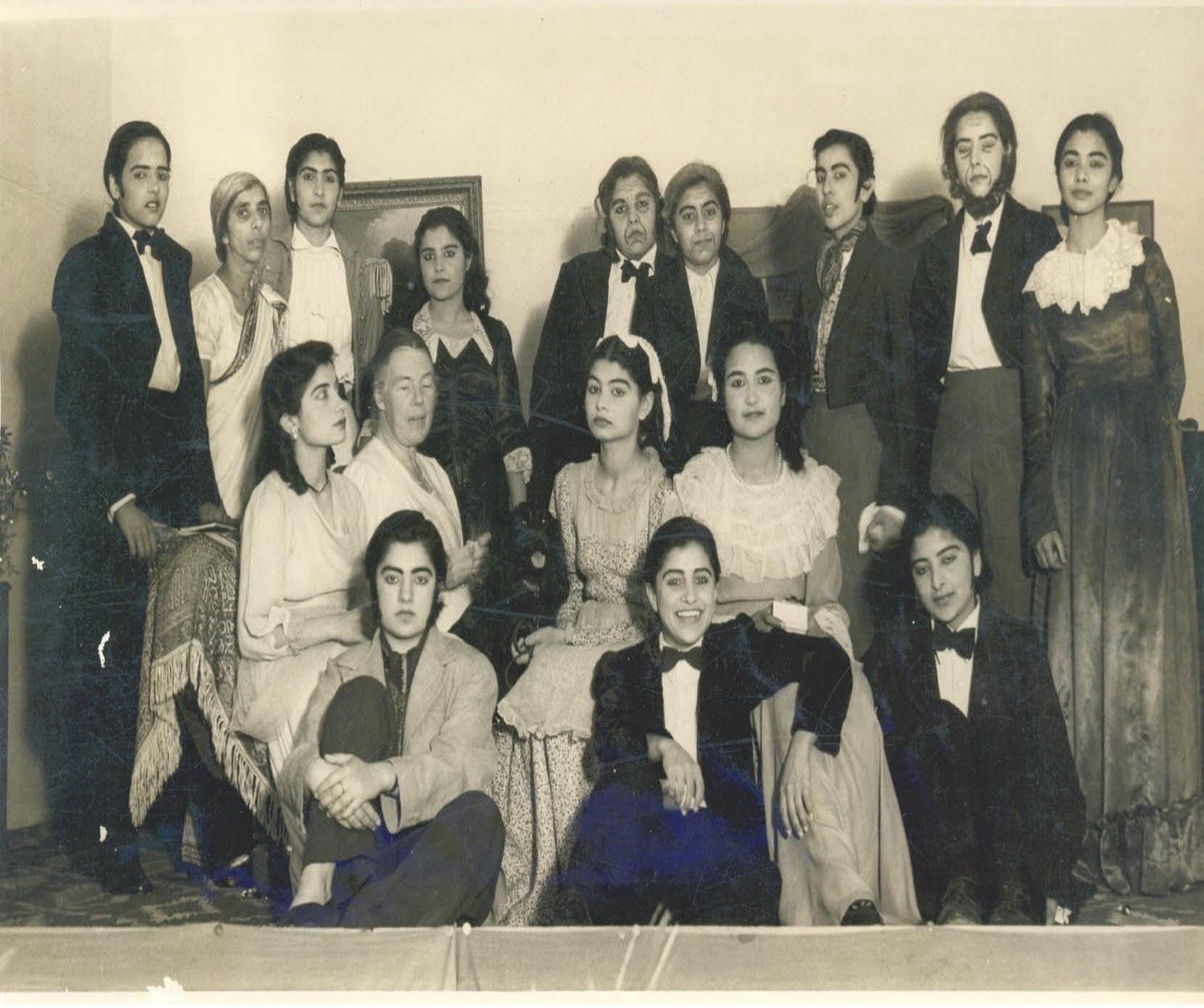
Kinnaird Girls, with the Principal Isabella McNair after a play performance (circa 1940s)
Kinnaird girls, after a play performance (circa 1940s)
With its roots in the British colonial history, the governing body is run by the protestant church in Pakistan. The bishop of Pakistan Church looks after the affairs of the college, and the principal of the college has to be a Christian. In 2008, Dr. Mira Phailbus finally retired after leading Kinnaird for almost 30 years or so. The board of governors appointed a new principal, Dr. Bernadette Dean. A catholic who had spent her entire life serving some of the most prominent educational institutions in Pakistan working tirelessly for the poor. Dr. Dean holds a PhD in education from Alberta University in Canada. She is an icon in civic education. Her research methodologies are taught world-wide. She had already been in office for almost six months when I was voted in. A wave of new fresh change was in the air. Some teachers seemed excited about her policies but most not so. She was terribly unconventional. Her pixie hair, her Anglo-English accent, simple and unassuming manner, Dr. Dean had won the hearts of so many students. She was progressive and down to earth. Where the older principals and teachers expected to be treated like the British Monarchy, Dr. Dean would simply walk around the college and connect with students right away.
Becoming the Head Girl of Kinnaird is no small victory, I had come into office, after a yearlong brittle election campaign. Traditionally, almost all Head-Girls, were by default selected to be on the interview panels for the Rhodes scholarship. They are always all-rounders. Like, I participated vociferously in all debating championships. I was in several large-scale theatre productions every semester. We toured India, United States, Scotland and several cities in Pakistan. I was a Fulbright scholar, and I played tennis. Almost 3000 women had voted for me. In a city of 11 million people, I could be recognized. Girls would come to me in shopping centers, “you are our head-girl”, and it still sometimes happens when I am visiting Pakistan.
Right after winning with my best friend Ammara Ahmed, Hladia Hall, Kinnaird College. (2009)
Campaign posters for the Head-Girl and Deputy Head-Girl, across the college. The campaign normally starts a year in advance. (2009)
Featured in local newspaper, photographed oath taking ceremony. (2010)
I was only 21 and Dr. Dean was my principal. I frequently met Dr. Dean for several changes we wanted to make in our college. I was fighting for girls to be allowed to dress more liberally. Unlike other colleges, Kinnaird College had no uniforms, but women were not allowed to wear jeans or dress in a western manner. This was due to the growing Islamic fundamentalism in Pakistan. I also wanted the college to relax rules around mobility, but the college wanted to discourage girls from having boyfriends, there were strict policies on when they could go out or not. Moreover, girls living on campus felt terribly trapped. While, the social aspects of women liberation were important, Dr. Dean and her team were looking at making teaching and instruction more robust. Over the years, the college’s educational standards had fallen. Most of the teachers were either too elderly or too young and preoccupied with domestic responsibilities. Hardly any teacher had a doctorate degree. Some of them awarded grades in exchange for what they needed from students, such as personal favors and even money sometimes. The faculty rooms were gossip chambers filled with mean girls. In this environment, some of us, who did not wish to be married off right after our undergraduate and were looking for a serious education found Dr. Dean to be a messiah. As months grew, and stricter policies for teaching and curriculum were being introduced, many teachers began to feel uncomfortable and even angry. A mob was brewing but those of us refusing to see the small side of human nature, thought it would die.
In early 2010, six months before my graduation from Kinnaird College, I received a call from a senior faculty member. I was informed that a protest was being organized against Dr. Dean, and I was asked to gather a crowd of students to lead this protest by next morning. This was due to some “unfair” demands she was making, like she required all faculty members to update their curriculums according to state level requirements and they were also being required to enroll in part-time PhD programs to update their degrees. As the Head-Girl, I worked very closely with senior faculty members. I would spend most of my time moving from event to event, sometimes meeting politicians and even celebrities. All of this was possible because I was fully supported by the faculty, staff and a wide majority of students. Even though I was going to graduate soon, I still needed the faculty to elect me for an award which could be considered the Summa Cum Laude. In Kinnaird it is called the Mangat Rai Award, named after the great Ms. Mangat Rai (Hindu Principal during 1960’s). There is hardly a Head-Girl in the 100 year or so history of Kinnaird College, who has not been given this award.
Farewell dinner for the outgoing student council and welcome dinner for the incoming student council, led by Hafsa Shorish, perched in blue dress right next to Dr. Dean in olive green. (2010)
I had to either make a Faustian deal and join the mob or think of Kinnaird College. After a very scary and terrifying night, I woke up, having made my decision. I did not lead a crowd at the protest. This was the first protest of the many which were to follow. They overlooked my judgement that first time but kept pressuring me. “Dr. Dean must go; she must resign, she must go”. As the pressure mounted, my popularity began to dwindle. I was being ostracized for my decision to not lead a mob against her. I cried, I hid, but I did not join the mob.
Lo and behold, few months passed, Dr. Dean called me into her office and shared some good news: some members of the governing body seem to be on her side. I offered to call some of them as well and report what I was experiencing, and all for the sake of Kinnaird College. It had given me everything and I saw what the college could do for women in an oppressed society. I also realized that there was hardly a chance for me to win anything once I graduate. In-fact, I thought, I’d be pleased if they did not throw the degree on my face. Foolishly, I thought, Dr. Dean may still win. If someone like Dr. Dean could lead the college, Pakistan would be lucky to have her. So, I decided to pick up the phone and call some members of the governing board, hoping they may think of our country and women particularly. It included top CEOS, the President of the Former Christian College in Lahore, President of Lahore University of Management Sciences (LUMS), the Head of Agha Khan Foundation etc. Nobody helped. An investigative team was sent and I was also interviewed. A few insignificant teachers, who barely held any power did support her, but it was not enough.
The atmosphere in the college was stifling. The oak trees wept silently. In the vast fields, students smelled a conspiracy growing, contempt for anyone who supported Dr. Dean was spreading. My best friend and I had a hiding spot. During my last years in Kinnaird, I barely had time for socializing, but sometimes I would go and meet Ammara at the backs of the college.
At the red-bricked, old staff houses where some unknown missionaries would come and stay. We would lie on the grass and watch the eagles in the sky. As they would go high and high, we would wonder if we could fly? For, how can we run away from this land, where our role models have betrayed us?
One day, after a fundraising event, I noticed a large group of teachers leaving Hladia Hall, the main auditorium right behind the tennis-courts. I went inside and saw Dr. Dean completely shattered. I asked her, what was this meeting about, she said, they are suggesting that I may have committed blasphemy against Prophet Muhammad. Now, this in Pakistan is equivalent to a racial slur in America, or perhaps even worse. Here, you may just lose your job or career, but if accused of being blasphemous in Pakistan, you can get killed in broad day light. I began to shake. I told her, we will go to the bishop. The Chief Minister of the State must protect her. As a Christian minority she must be protected by the Church and the State.
So, I did. A group of us went to see the bishop. Nothing changed. The academic year was coming to an end. We were busy preparing for a series of events for the graduating class. High-teas, concerts, photo-shoots, formal dinners. The last days were terrible. Dr. Dean informed me that the bishop, along with the entire board of governance was working together and against her. She was forced to resign or face the consequences of being labelled as blasphemous. She did resign. This was primarily because Dr. Dean had disturbed a mafia, a very sophisticated mafia, and blew whistles on their (financial as well as academic) irregularities. This is what had provoked the ire of the mob.
Later that year, I moved to Europe for the next 10 years. Mangat Rai was never awarded to me. I was not invited to the graduation; but my degree was mailed to my parents. It was heart-breaking but I knew I made the right decision. Dr. Dean left Lahore and moved back to Karachi. Later, an Islamic group accused her of wanting to commit blasphemy; after receiving death threats, Dr. Dean moved to Canada along with her family- overnight. Perhaps she had to revoke her Pakistani citizenship. She served as the Associate Dean of the University of Central Asia for several years before retiring and relocating permanently to Ontario.
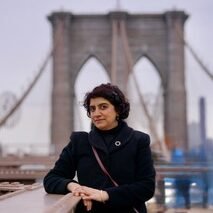
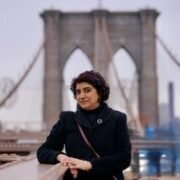
Meeting Dr. Dean after several years in NYC, Christmas 2022