Navigating the modern honesty crisis: how systemic willekeur and climate narratives reshape our reality

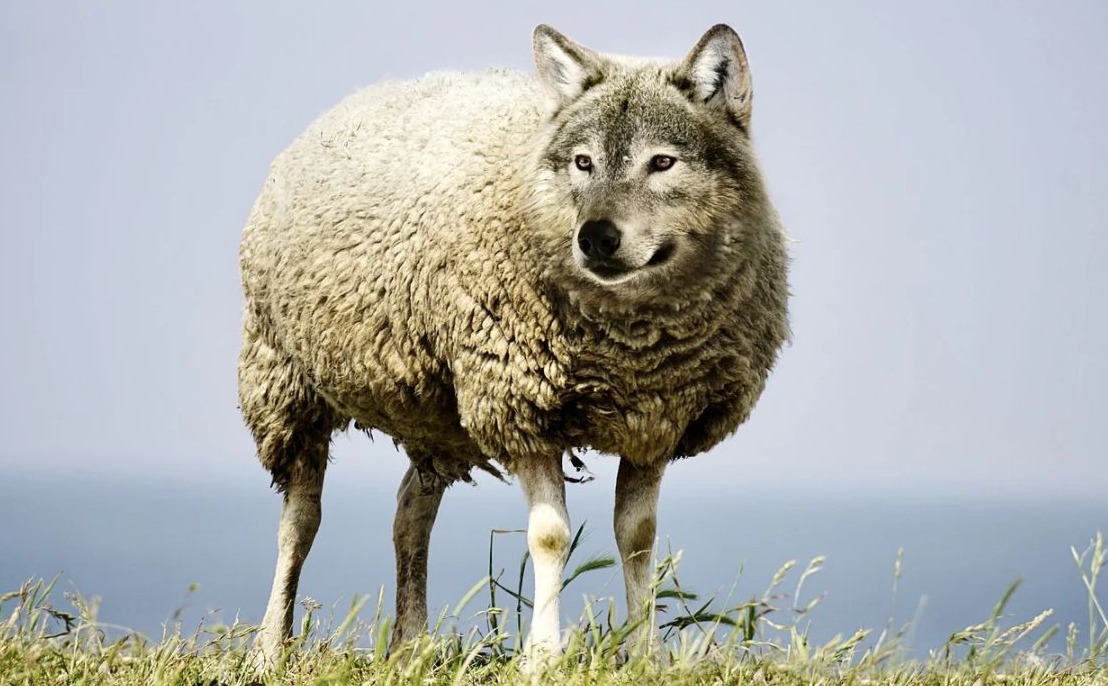
This critical analysis explores the modern honesty crisis and the illusion of control in a changing world. From shifting societal transitions to climate change narratives and the controversial wolf policy on the Veluwe, it uncovers how administrative disorder and media-driven mass hysteria create systemic willekeur, diverting public attention from reality and threatening authentic human values.
Feelings of Powerlessness and the Game of Winning and Losing
You too have undoubtedly felt at some point in your life as if you were facing an unfair, overwhelming force. It is that suffocating feeling that the cards behind the scenes have already been dealt, the rules of the game are being changed along the way, and your loss is therefore inevitably close at hand. Just like me, you have surely been confronted with bullying or unfair displays of power in your life. You must have stood against multiple opponents during your school days or career, where the proportions were completely skewed, right?
At such moments, we often comfort ourselves with well-known universal wisdoms. "Sometimes you win, sometimes you lose," is a familiar expression of my own whenever something goes wrong or miscarries in my life. Or, as we so aptly put it in plain Dutch: "Soms zit het mee en soms zit het tegen." It is a pragmatic philosophy, because you simply cannot have everything in this life.
Winning and losing are an inseparable part of our human existence. But there is a fundamental difference between a fair loss due to the whims of fate and the deep frustration that arises from invisible forces or a lack of honesty. The most irritating and unpalatable losses, in my opinion, are those you never saw coming. It is about those sweeping changes in an environment that is familiar and safe to you, which seem to pop up out of nowhere.
Suddenly, universal laws and social rules change without any clear, logical reason being provided. I am absolutely not asking you as a reader to agree with me on everything, or to blindly support all my personal insights. What matters to me is that we start thinking simply and critically again about the world around us.
The Honesty Crisis and the Erosion of Human Values
When I look at current society, I unfortunately see a deeper problem feeding this randomness. We find ourselves in a true 'honesty crisis'. Distorting the truth has now become almost normalized, both in business and in personal relationships. We see it all around us: aggressive sales strategies and marketing models driven solely by targets, bonuses, and short-term profits.
These kinds of practices undermine the operational integrity of organizations and sacrifice genuine customer satisfaction and mutual trust on the altar of quick financial gain. When the foundations of honesty and authenticity erode in professional and social environments, we lose our grip on our human values. The result is a society where systemic errors are no longer corrected but are brushed under the carpet behind smooth talk. The concept of 'Semper Simul' — always together — should be our compass in this. It reminds us that we share a collective heritage and that we can only offer resistance to this overwhelming force in togetherness and through absolute openness.
Social Transition: Is Emancipation Complete?
Look, for instance, at how quickly our culture has transformed in recent decades under the guise of progress. It began to become tangible in my life with the emancipation of women. Don't get me wrong: I know very well, of course, that not so long ago women were structurally marginalized in our society, and that this was a historical inequality. But looking at the current state of affairs, don't you also think that this emancipation might meanwhile be called a completed process? Today, however, the discussions seem only to become fiercer and more compelling, as if we have completely lost our natural balance.
If you critically consult the history books, you will discover that there have always been powerful women who shaped history into what it is today. At the same time, it appears from more and more modern sources and research that men at the time primarily wrote history to suit themselves. That one-sided history from the old schoolbooks is therefore actually worth very little. In reality, women have been determining the history of man and the course of history behind the scenes for centuries, right? I can live with this perfectly well, by the way; it precisely witnesses to the true, authentic power that has always been present. But the urge of institutions to force a restructuring of everything raises major questions.
Narratives Around Climate Change and Historical Facts
This brings me to a next topical theme where the truth turns out to be rather elastic: what do you actually think about nature? Here, too, we see a steering narrative emerging. Of course, I know very well that we as humanity do not always behave neatly and respectfully towards our natural living environment. It is an established fact that we desperately need that nature to survive. But the crucial question we must dare to ask is: are we as humans truly the sole and direct cause of a potential, catastrophic climate change?
By now, you probably know that I have a huge passion for everything called history. And that history teaches us that climate change is of all times. It is not just about human decisions, but precisely also about how humans throughout the centuries had to deal with the whims of that very same climate. Have you ever heard of the Little Ice Age in this context? This was a relatively cold period that lasted roughly from 1300 to 1850. In contrast to the real, major ice ages, Europe during these centuries was admittedly not buried under kilometers of thick land ice, but the average annual temperature in Western Europe did drop by 1 to 2 massive degrees Celsius.
That seemingly small drop caused centuries of extremely severe winters, cool, wet summers, and consequently enormous social and economic changes. Scientists attribute the Little Ice Age entirely to a combination of purely natural factors. After all, there were no cars in those days, and industrial environmental pollution amounted to absolutely nothing at the time. The earth changed autonomously, without there being a government to levy a CO2 tax on it.
Government Policy and the Paradox of the Wolf on the Veluwe
In the present era, we are apparently collectively concerned with that same environment again. But when you think about it longer, a feeling creeps over you: isn't this entire green climate story primarily a gigantic project to get government expenditures in order through all kinds of levies and taxes? Another striking example of this overshooting and opaque policy is the active protection of wolves in Europe, at the expense of livability for humans.
I walk every day with my labrador Pip in the woods around our house. You really wouldn't believe how often I am approached by tourist forest walkers about the presence of those wolves. The questions are invariably the same: "Have I ever seen them live yet?" or "Aren't I scared to death for my unleashed little dog?" Why on earth must there be wolves roaming around in an overpopulated country like the Netherlands? Oh right, that is sold to us through official channels as the ultimate way to keep the natural wildlife population up to par.
The paradoxical and downright funny thing about this is that the exact same people who warn me about the danger of the wolf, urgently request me in the months of April and May to keep my dog strictly on a leash. That is supposedly necessary to protect the newborn wildlife in the forest. So the dog must be tied up because of the fragile nature, but the wolf is allowed to hunt freely? It is a logic that makes no sense whatsoever and witnesses to the arbitrariness with which rules are imposed.
Do not be alarmed, because I am going a step further in this madness. Today, on this Sunday, June 7, 2026, I open my newspaper and I have to read that in Epe, here in the Netherlands on the Veluwe, a large-scale search operation for a missing 73-year-old man was abruptly halted at 10:00 PM. The reason that the search and rescue organization SAR Nederland officially gives for this is the acute danger that the wolves and the natural environment pose to the rescue workers themselves. A human being in distress is left behind in the cold because a predator enjoys priority.
Administrative Disorder or a Conscious Diversion?
Well, can you explain it to me logically? Who actually bears the responsibility for our safety, and who actually decides what happens where and when? More and more, the uncomfortable feeling of total disorder and arbitrariness creeps over me and many others.
A disturbing question arises: is this social disorder perhaps being consciously created? Is it a calculated strategy to keep citizens constantly occupied with mutual discussions and effectively distract their thoughts from the real problems and the failure of the system? Is a form of mass hysteria being created over and over again via the media to make us collectively blind as humanity to the real reality and the decline of honesty? In short: is there, behind the scenes, as more and more critical thinkers around us claim, a greater power watching over us and meanwhile abusing us for their own convenience and political gain?
Do you still know?