If Plato Had Tinder: Notes from a Lost Symposium

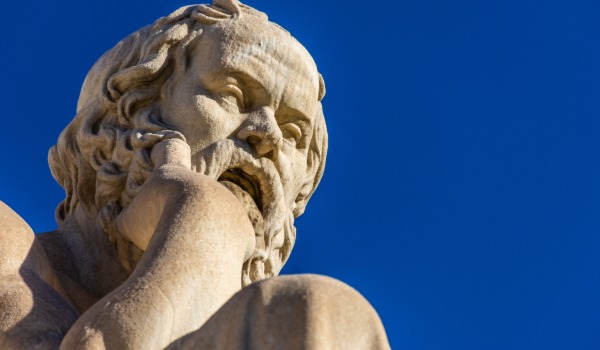
Imagine this: Plato, the great philosopher of love, sitting in a café in Athens — or maybe Connaught Place — phone in hand, scrolling through Tinder.
Swipe left. Swipe right. Swipe the existential crisis.
Now, picture him looking up and saying, “Is this what Eros has become?”
Welcome to the lost symposium — not of wine and wisdom, but of algorithms and wi-fi. Because somewhere between The Symposium and Tinder, between Diotima’s ladder of love and a dating app’s “It’s a Match!”, we’ve redefined what it means to connect.
Act I – From the Symposium to the Swipeposium
In Plato’s Symposium, a group of thinkers gather over wine to discuss love – Eros, the divine force that moves us from desire to truth. For them, love wasn’t just about attraction; it was a spiritual ascent – from the beauty of one body to the beauty of all bodies, to the beauty of the mind, and finally to the beauty of the Good itself.
Now imagine that same party today.
Socrates would be analysing someone’s Hinge prompt.
Aristophanes would be making memes about “finding your other half".
And Alcibiades would probably have a six-pack and 10k followers on Instagram.
Love, once a slow climb toward truth & divinity, has become a fast scroll toward validation through Swipes. So,Welcome to The Swipeposium — where desire no longer ascends; it refreshes. We don’t climb the ladder of love — we swipe through the catalogue of faces.
We’re still searching for love, yes — but perhaps not upward anymore.
Just sideways.
Endlessly.
Act II: The Algorithm as Philosopher-King
In Plato’s Republic, he dreamt of a society ruled by philosopher kings — wise leaders guided by reason and justice.
Today, we’re ruled by algorithms — unseen kings guided by engagement metrics and profit margins.
Think about it: who decides whose face you see? Who decides who’s “your type”?
Not you — not really. It’s data. It’s math. It’s a little code that says, “You liked three people with dogs and one who likes Coldplay – here's your soulmate.”
And it’s not just playful. The algorithm quietly mirrors our biases — caste, beauty, class, even religion — serving them back to us with a filter and a dopamine hit. Plato wanted love to free us from illusion; the app just teaches us to curate one.
Act III: Liquid Love and the Paradox of Choice
Sociologist Zygmunt Bauman once said we live in an age of liquid love — relationships that flow easily, but rarely stay.
Because what do dating apps give us?
Infinite choice. But here’s the paradox: the more options we have, the harder it is to choose.
Every match feels like a maybe, every conversation like an audition. You’re not falling in love anymore — you're endlessly comparing, optimising, and managing risk.
Love has become a buffet — and everyone’s afraid of the wrong plate.
So we stay suspended – not in loneliness, but in almostness.
And in that space, love becomes liquid: beautiful, shapeless, and hard to hold
Act IV : The Emotional Labour of Love
And let’s be honest — this is exhausting.
Behind every witty bio, every emoji, every late-night “wyd?”
There's work. - Emotional labour.
We perform the charm. We schedule vulnerability. We manage heartbreak with a settings button.
For women, this labour often doubles – the need to be desirable but not “too much" and independent but still "safe".
For men, too, the pressure to perform confidence, to seem strong while quietly craving softness.
We call it "self-presentation". Plato might’ve called it the performance of shadows.
Dating apps tell us to be authentic — but only the kind of authentic that gets likes.
And when it fails — when a match goes silent or a conversation dies — it’s not just rejection. It feels like an algorithmic verdict on our worth.
Act V: What Plato Would Say
So what would Plato tell us if he could log in for one night?
“You’ve built a beautiful machine that makes love efficient — but not meaningful.”
He would remind us that Eros wasn’t meant to end at desire. It was supposed to elevate us — to make us better, wiser, kinder.
Love, in its truest form, was a bridge between the human and the divine.
Maybe that’s what we’ve lost — the patience to climb that bridge. We’ve made love convenient, but in the process, we’ve made it thin
But here’s the good news: the story’s not over.
Even in this age of screens, people still yearn for what Plato called the “meeting of souls.” Every awkward date, every honest conversation, every real laugh — that’s the spirit of the Symposium, reborn.
Final Swipe
So, if Plato had Tinder, I think he’d still use it — but differently.
He’d ask better questions: not “What’s your type?” but “What’s your truth?”
He’d swipe right only if you could hold a conversation about the nature of the good.
And he’d probably start a group chat called The Symposium Reloaded.
Because maybe that’s the point — love will always adapt.
From amphitheatres to apps, from dialogues to DMs — we keep trying to understand what draws us together, and why it so often pulls us apart.
We may be trapped in the cave of algorithms,
but every now and then, someone’s light still breaks through the screen —
and for a moment, we remember what love was meant to be.